







Home / Mahjong / Riichi Mahjong
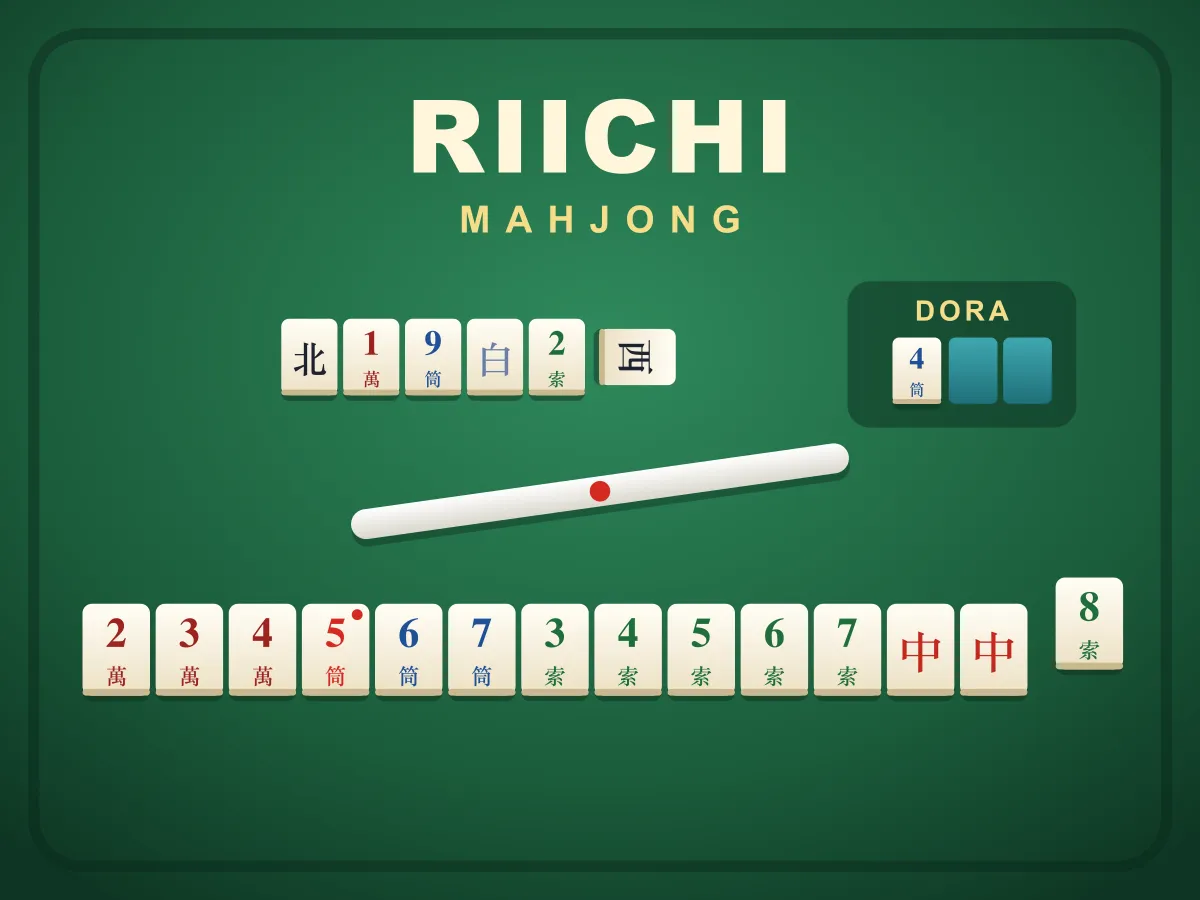
Riichi Mahjong is the Japanese form of mahjong, and this is a free online table where you play it against three computer opponents with no download and no sign-up. Every rule that makes riichi different is here — a hand needs at least one yaku to win, riichi declarations with the 1,000-point stick, dora and ura-dora, red fives, furiten, chi, pon and kan — with full han and fu scoring and a score sheet after every hand. Play a quick East-only game or a half game, on desktop or phone.
How to play Riichi Mahjong
- Four players, 136 tiles, 25,000 points each. You sit at the bottom; the three computer players sit to your right, across and on your left. Each takes 13 tiles and the dealer starts with a 14th.
- On your turn you draw a tile and throw one away. Tap a tile once to pick it and again to discard it, or use the arrow keys and Enter. Your discards stay in front of you for everyone to read.
- A finished hand is four sets and a pair: a set is three in a row in one suit (a run) or three of a kind. Seven pairs and thirteen orphans are the two special shapes. Winds and dragons never make runs.
- Every winning hand needs at least one yaku — a scoring pattern such as all simples (tanyao), a dragon triplet, or riichi itself. Dora add value but never count as a yaku on their own.
- When your closed hand is one tile from finished (tenpai), you can declare riichi: put down 1,000 points and from then on your draws go straight out unless they win. Riichi is a yaku, and a riichi win also turns over the ura-dora.
- Win by drawing the tile yourself (tsumo) or by claiming someone else's discard (ron). You cannot ron while any of your waits is in your own discards, or after you let a winning tile pass until your next draw — after riichi, for the rest of the hand. That is furiten.
- You can claim a discard to complete a set: pon (three of a kind) from anyone, chi (a run) only from the player on your left, and kan (four of a kind). A claimed set is open, which lowers some yaku and rules out riichi.
- If the wall runs out, players who are tenpai collect 3,000 points from those who are not. The dealer keeps the deal after winning or being tenpai. Each repeat and each draw adds a counter (honba) worth 300 more on the next win.
- The game is East-only by default (a half game, East and South rounds, is in the settings). Finish in first place to open the next table.
Tips
- Throw lone winds and dragons early unless they are worth something to you. A dragon, your seat wind and the round wind make a yaku as a triplet; the others only make a pair.
- Keep tiles that connect both ways. A 4-5 waits on 3 and 6; a 1-2 waits only on 3. Turn on Hints to see how many tiles your hand still needs and which tiles you are waiting on, with how many are still unseen.
- When someone declares riichi and your hand is far from ready, stop chasing it. Throw the tiles they have already discarded — they cannot win on those — then honours that are mostly visible.
- Do not open your hand with a call unless it keeps a yaku. A pon of a dragon is always safe; a chi with terminals or honours still in your hand can leave you with nothing to win with.
- Check the dora before you discard: every dora in your hand is a han. A red five counts as one too when red fives are on.
- Before you declare riichi, look at the waits: a riichi on two tiles that are both already in the discards cannot win.
FAQ
Is Riichi Mahjong free to play online?
Yes. It runs in the browser with no download, no account and nothing to buy. All five tables are here; you open the next by finishing a game in first place.
What is the difference between Riichi Mahjong and the other Mahjong game on this site?
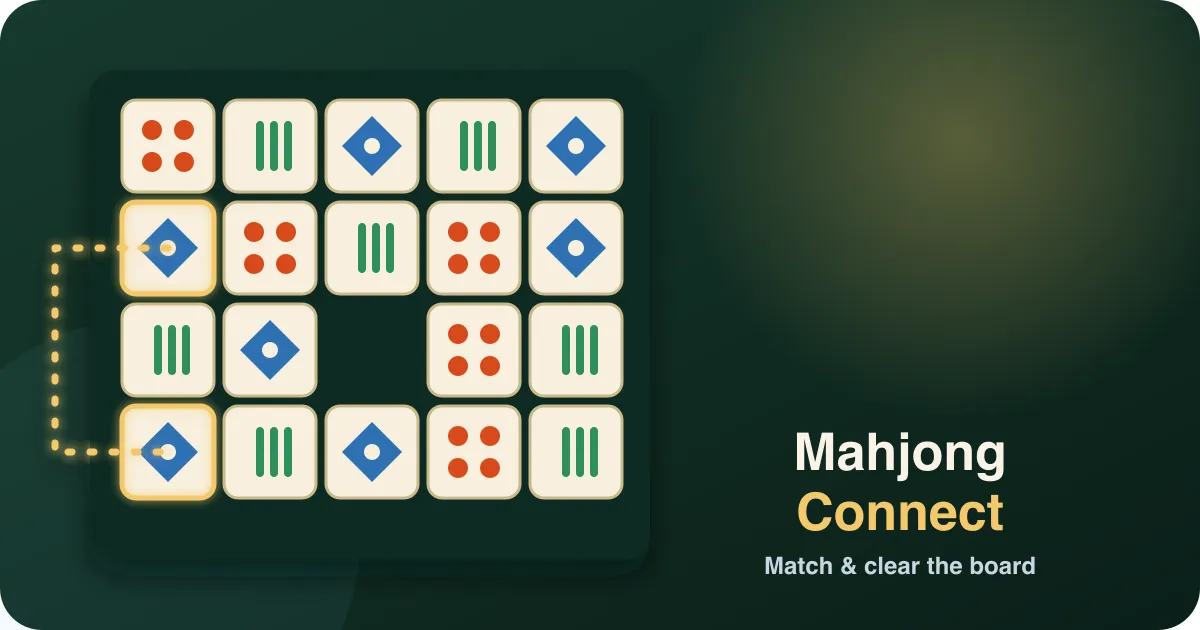
Our Mahjong page is the Hong Kong style four-player game with faan scoring and no minimum hand. Riichi is the Japanese rule set: a hand needs at least one yaku to win, you can declare riichi, dora and ura-dora add value, furiten stops you winning on a discard, and points are counted in han and fu from a 25,000-point start. Mahjong Solitaire and Mahjong Connect are tile-matching puzzles, a different kind of game altogether.
Which yaku are in the game?
One han: riichi, ippatsu, menzen tsumo, tanyao (open hands too), pinfu, iipeikou, yakuhai (dragons, seat wind, round wind), haitei, houtei, rinshan kaihou and chankan. Two: double riichi, chiitoitsu, sanshoku doujun, ittsu, chanta, toitoi, sanankou, sanshoku doukou, sankantsu, honroutou and shousangen. Three: honitsu, junchan and ryanpeikou. Six: chinitsu. Open hands lose one han on sanshoku, ittsu, chanta, junchan, honitsu and chinitsu. Yakuman: kokushi musou, suuankou, daisangen, shousuushii, daisuushii, tsuuiisou, ryuuiisou, chinroutou, chuuren poutou, suukantsu, tenhou and chiihou.
How is a hand scored?
Han come from yaku and dora; fu from the shape — 20 to start, 10 for a closed ron, 2 for a self-draw, more for triplets and kans (more again for terminals, honours and concealed sets), for a dragon or wind pair and for a closed, edge or single wait, rounded up to ten. Seven pairs is always 25 fu; pinfu is 20 by self-draw and 30 by ron. Basic points are fu × 2^(han + 2), capped at mangan (2,000) and rising through haneman, baiman and sanbaiman to yakuman. A ron costs the discarder four times that (six for the dealer); a self-draw is shared out. For a player who is not the dealer, 1 han 30 fu by ron is 1,000 points and 4 han 30 fu is 7,700.
Which rules does this version use?
East-only games by default, everyone starting on 25,000, with red fives (one in each suit) that you can turn off. Open tanyao counts, a double-wind pair is 4 fu, there is no rounding up to mangan at 4 han 30 fu, 13 han or more is a counted yakuman, and each yakuman scores once. Kan dora turn over at once. Only the first player after the discarder can ron a tile. Swap-calling is not allowed. There are no abortive draws and no nagashi mangan. The game ends after the last hand unless the dealer keeps the deal without being in first place, and at once if anyone drops below zero; riichi sticks left over go to the winner.
What is furiten?
A rule that stops you winning on someone else's discard. You are furiten while any tile you are waiting on is in your own discards, and after you let a winning tile pass, until your next draw. Once you have declared riichi, letting a winning tile pass makes you furiten for the rest of the hand. You can still win by drawing the tile yourself. The game tells you when you are furiten.
How good are the computer players?
Every table is measured, not guessed. One player of each level sat down with three players of the level below for 1,200 East-only games (300 sets of walls, each played four times with the lone player moved round all four seats); the Novice played 400 against three random discarders. An even player would average 2.50th place and finish first a quarter of the time. First-place rate and average place: the Novice against random discards 85% (average place 1.29); the Apprentice against Novices 45% (average place 1.99); the Player against Apprentices 32% (average place 2.27); the Expert against Players 26% (average place 2.43); the Master against Experts 24% (average place 2.39). The Master wins no more often than the Experts do, but it folds well enough to come last only 16% of the time. Mahjong carries a lot of luck: any table can beat you in a single game, and the edge only shows over many.
Can I play Riichi Mahjong on my phone?
Yes. On an upright phone the table stacks the three opponents over your hand, and every action is a button or a tap. On a computer the arrow keys pick a tile and Enter discards; T is tsumo, R is riichi (or ron when a discard wins for you), P, C and K are pon, chi and kan, and Escape passes.