








This is Mahjong the tile game: four players around a table, 136 tiles, and a race to build a hand of four sets and a pair. It is free, runs in the browser against three computer players, and needs no download or account. Everyone starts with thirteen tiles. On your turn you draw one and throw one away, and the hand you are building is made of runs of three in a suit, triplets, and one pair to finish. What lifts it above solitaire is that the discards are public and claimable: any player can take a discard to complete a triplet, the player to the discarder’s right can take one to complete a run, and anyone holding three of a kind can call a kong for a fourth. A claim jumps the turn order, which is why watching the pond in the middle of the table matters as much as watching your own tiles — it is the only public information in the game. The tiles are three numbered suits of one to nine, plus the four winds and three dragons, which form triplets but never runs. Scoring is Hong Kong style faan: a plain hand is worth one, all triplets three, a half flush three, a full flush seven, all honours ten, with extra for a dragon triplet, your own seat wind, a concealed hand or a self-draw. There is no minimum-faan rule, so any legal hand can go out. Six levels of opponent differ mostly in restraint — the easiest ones call pung on tiles that do not help them and lock their hands open for nothing, which is the most common way a real beginner loses.
How to play Mahjong
- Four players, 136 tiles, thirteen each. You sit at the bottom of the table and the other three are computer players.
- On your turn you draw a tile and then throw one away. Tap a tile once to select it and again to discard — a mahjong hand is dense, and a one-tap discard throws the wrong tile far too easily.
- A winning hand is four sets plus a pair. A set is either three consecutive tiles in the same suit, or three of a kind. Fourteen tiles in total.
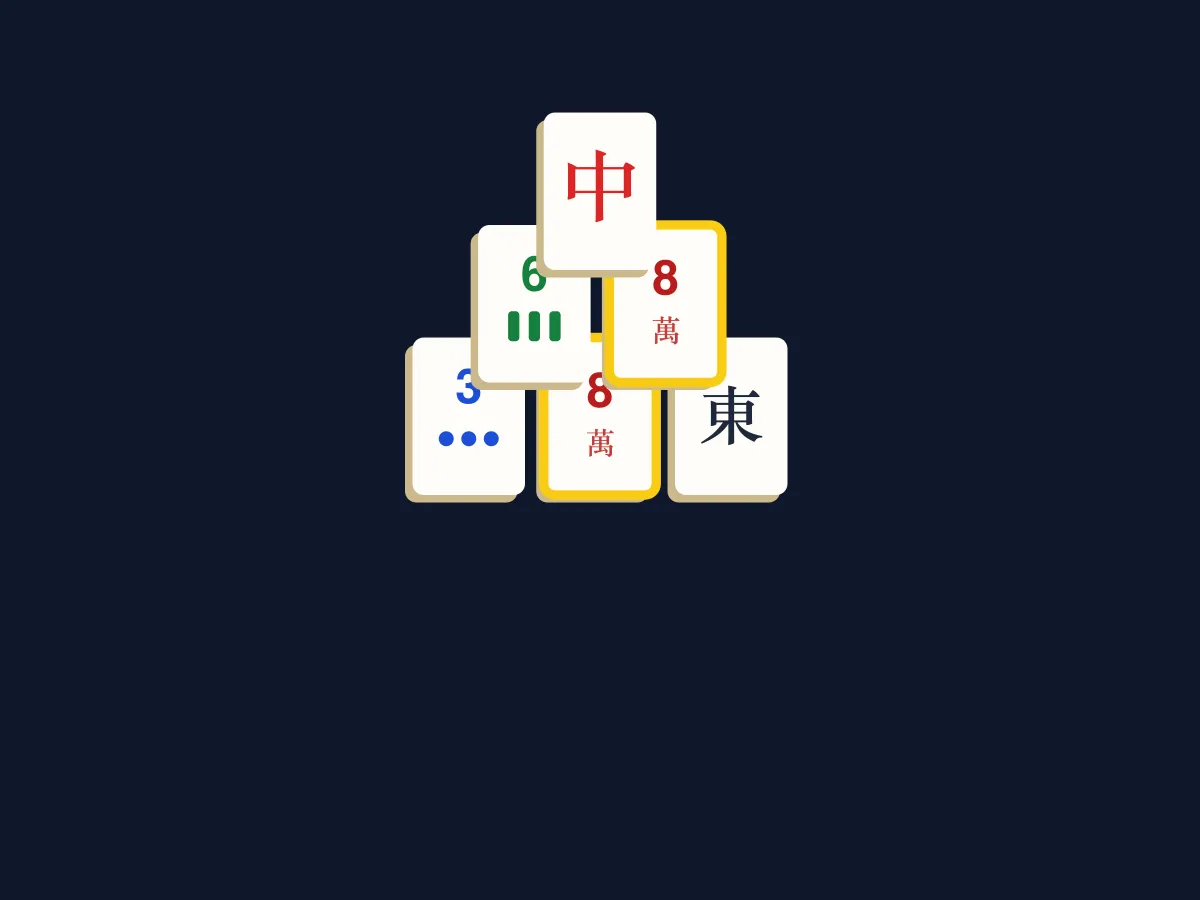
- The three numbered suits are Characters, Bamboo and Circles, each running one to nine. The four winds and three dragons are honours: they make triplets but never runs.
- When somebody discards, you may claim it. Pung takes it for a triplet and is open to anyone. Chow takes it for a run and only the player to the discarder’s right may call it. Kong takes it for a fourth matching tile and draws you a replacement.
- A claim jumps the turn order — play resumes from whoever claimed, and the players in between lose their turn.
- Claiming a discard turns that set face up on the table. That costs you the concealed-hand bonus, so a claim needs to be worth more than the tile it gains you.
- Seven Pairs is also a winning hand: seven different pairs, with nothing claimed. It is the one shape the ordinary four-sets-and-a-pair rule cannot reach.
- Scoring is in faan. A plain hand scores one; all triplets three; half flush three; full flush seven; all honours ten. A dragon triplet, your own seat wind, a fully concealed hand and a self-draw each add one.
- The hand ends when somebody goes out or when the wall runs down. A drawn wall is nobody’s win and the tiles are dealt again.
- The pond in the middle shows every discard in the order it fell. It is the only public information in the game — read it.
Tips
- Throw honours away early if you only hold one. A single wind or dragon can never become a run, so it needs two more of exactly that tile — and every turn that passes makes that less likely.
- Do not call pung just because you can. An open hand loses the concealed bonus and tells the whole table what you are collecting, so the set you gain has to be worth more than both.
- Chow is the cheapest call in the game and it is only available from one player. If you are waiting on a run, watch the seat to your left specifically.
- Keep tiles that connect in two directions. A 4-5 waits on both 3 and 6; a 1-2 only waits on 3. That difference decides most hands.
- Watch the pond for what is already gone. If all four of a tile have been discarded, any wait that needs it is dead and the hand has to be rebuilt.
- A flush is worth chasing when you are already most of the way there. Half flush is three faan for very little extra work if your hand is already one suit plus honours.
- Late in the hand, discard what has already been thrown safely by somebody else. It cannot be the tile an opponent is waiting on if they passed on it a moment ago.
- If the wall is nearly empty and you are still three away, stop pushing and throw safe tiles. A drawn hand costs nothing; feeding somebody a big hand costs a lot.
FAQ
Is this the same as the mahjong matching games?
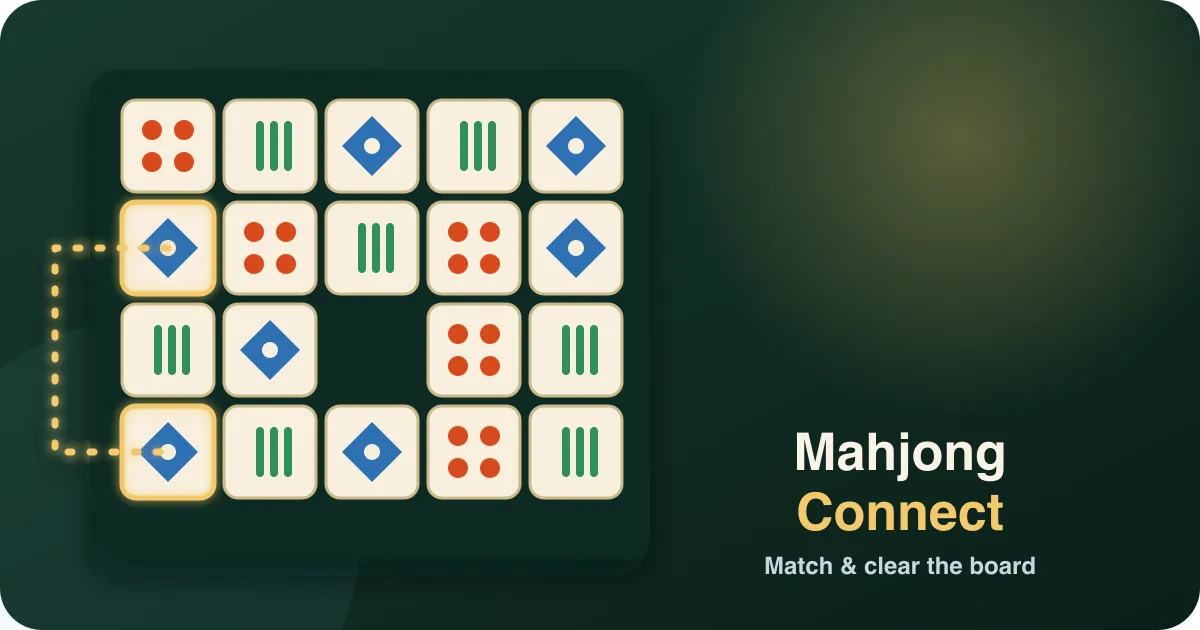
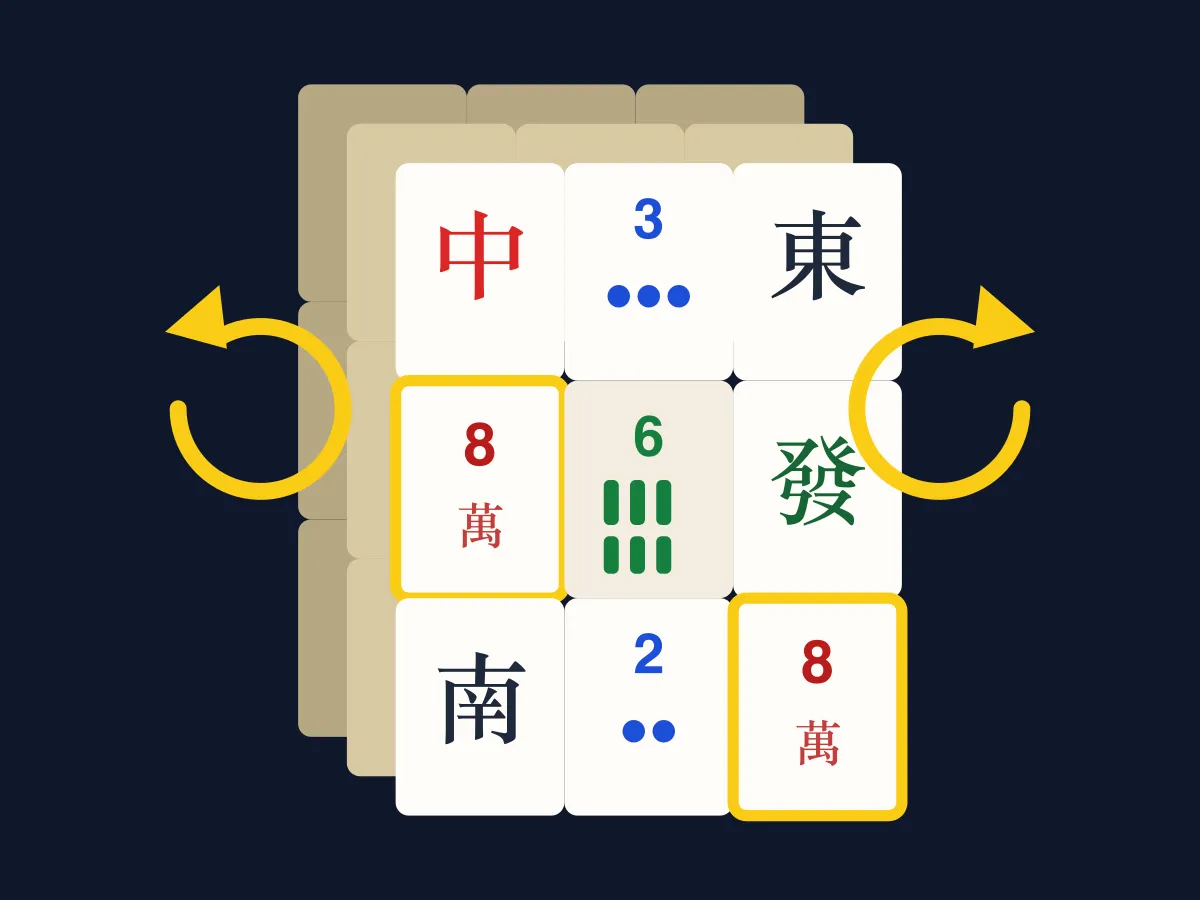
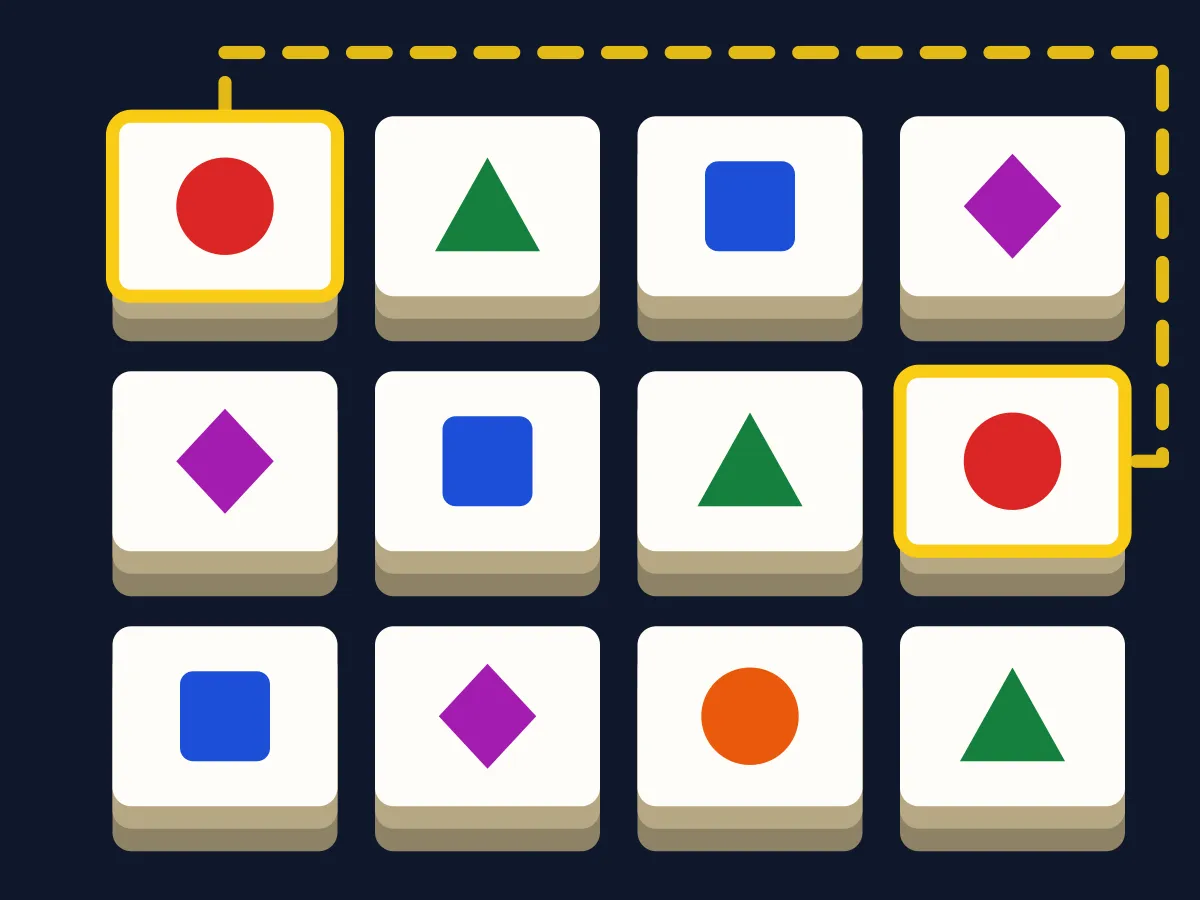
No, and it is worth being clear about. Mahjong Solitaire, Mahjong Connect and 3D Mahjong are tile-matching puzzles played alone against a layout — you pair identical tiles until the pile is gone. This is the four-player game those puzzles borrowed their tiles from: you draw and discard, claim from your opponents, and build four sets and a pair. They share the artwork and nothing else.
Is Mahjong free to play?
Yes. It runs in the browser with no download, no sign-up and nothing to buy. All six opponent levels are here and unlock as you win hands.
What counts as a winning hand?
Four sets and a pair, fourteen tiles in total. A set is three consecutive tiles of the same suit or three of a kind, and a kong of four counts as one set. Seven different pairs is also a win, but only with a fully concealed hand.
When can I call chow, pung or kong?
Pung and kong are open to any player on any discard. Chow — taking a discard to complete a run — is only available to the player sitting to the discarder’s right, which in this game is you when the seat on your left throws. If two players claim the same tile, a win beats a pung or kong, and those beat a chow.
Why would I not claim a tile I can claim?
Because the set goes face up. An open hand loses the fully-concealed bonus and shows the table what you are building, and a pung that does not actually move your hand forward has cost you both for nothing. The two easiest opponent levels make exactly this mistake on purpose — it is worth watching them do it.
Which ruleset is this?
Hong Kong style with a 136-tile set, so no flower or season tiles. Scoring is a short faan table covering the patterns that actually come up rather than the full list. There is deliberately no minimum-faan rule: at a real table you often need three faan to go out, which in a single-player game just means watching the wall run down, so any legal hand wins here.
What happens if nobody wins?
If the wall empties before anyone goes out, the hand is a draw. Nobody scores and the tiles are dealt again. It is a normal outcome, not a failure — a cautious table often ends this way.
Does it work on a phone?
Yes. The hand wraps to fit the width of the screen rather than scrolling, the three opponents sit around the pond in the positions they would at a real table, and the two-tap discard means you will not throw a tile by brushing the screen.