
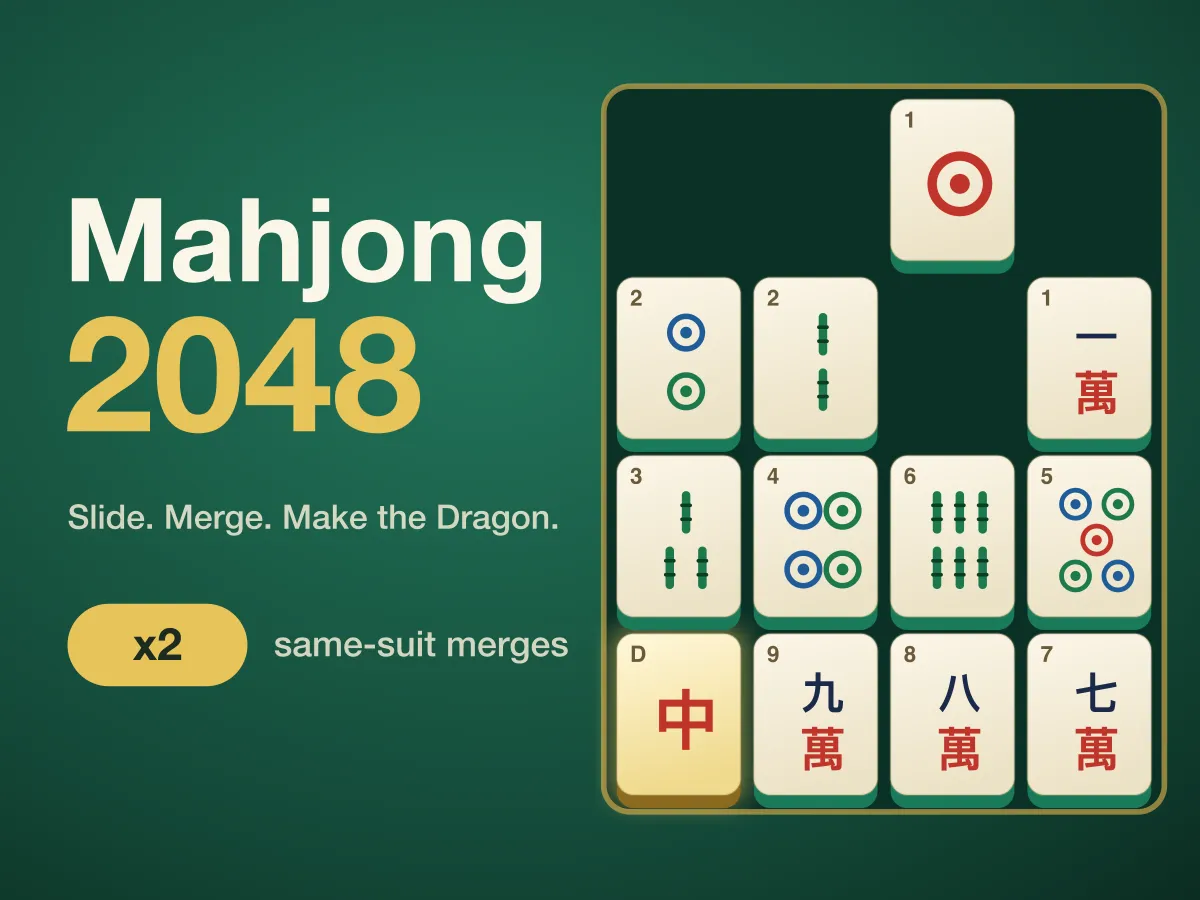



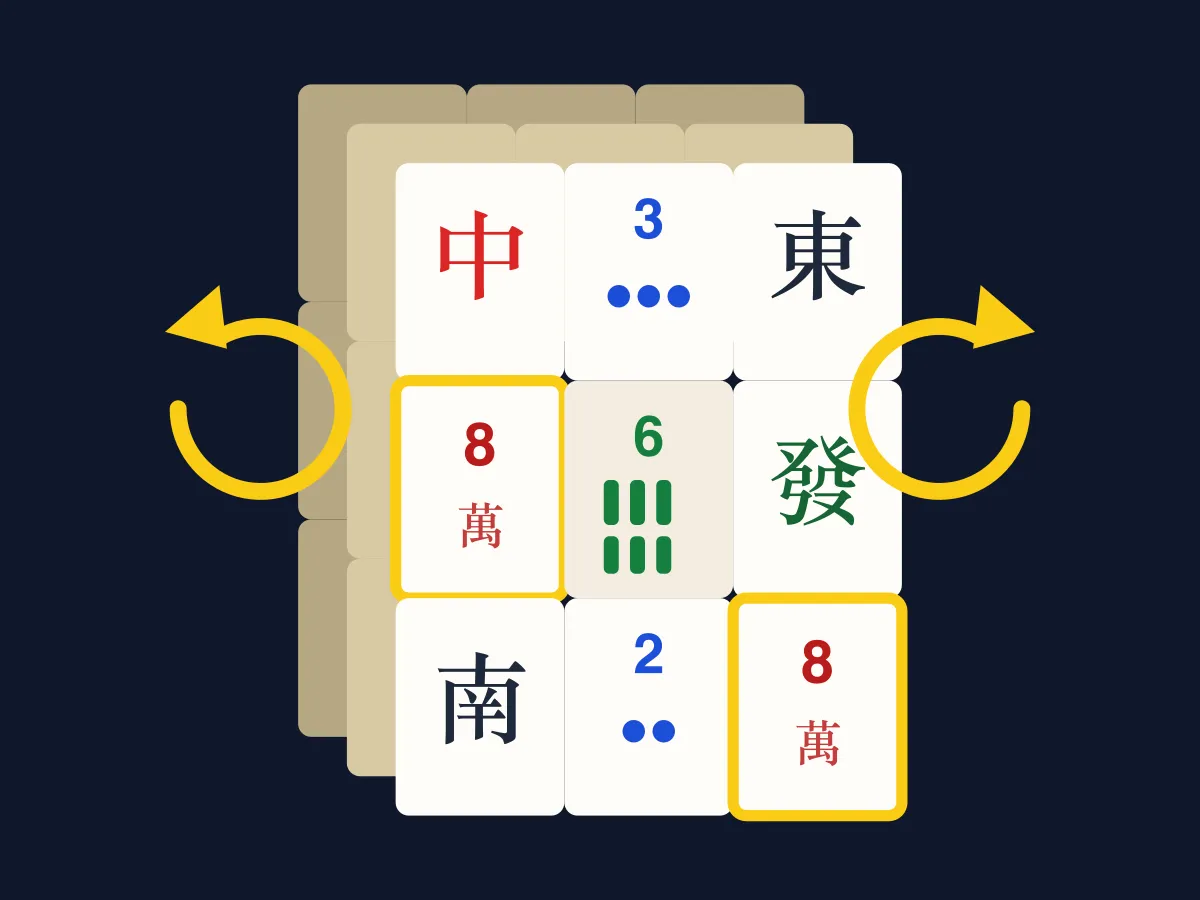
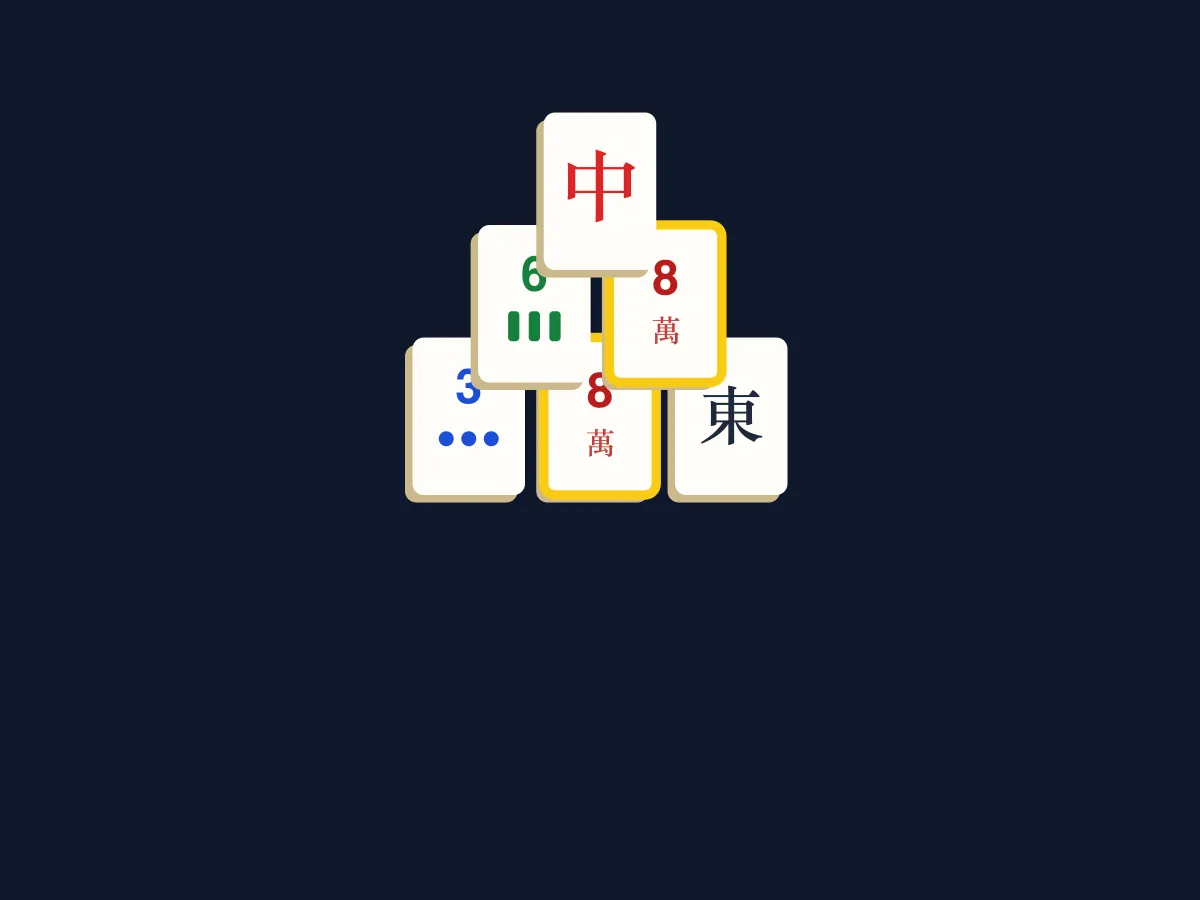

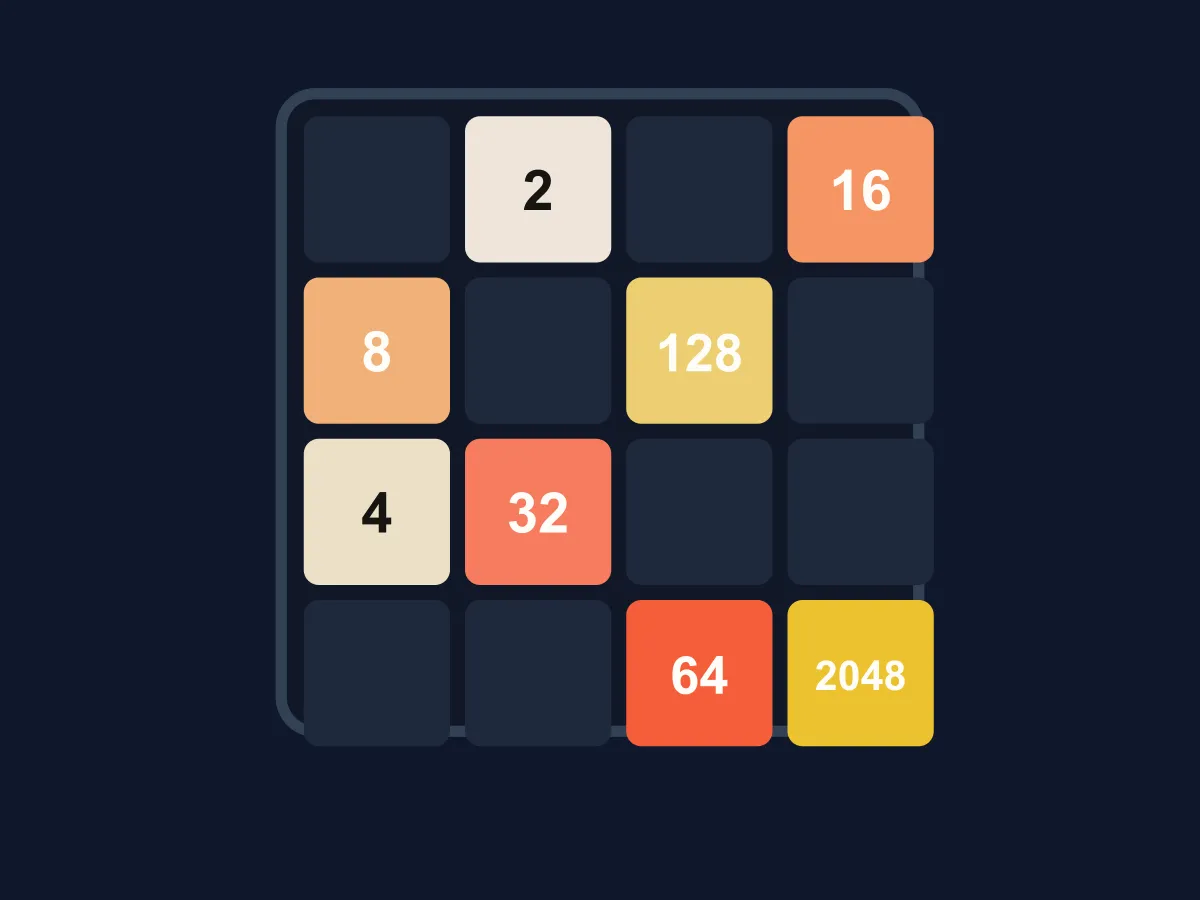


Mahjong 2048 is the sliding number puzzle you know, dealt with mahjong tiles instead of numbers. Swipe or press an arrow key and every tile on the 4×4 board slides that way; when two tiles of the same rank meet they merge into the next rank up — two 1 Dots make a 2, two 8s make a 9, and two 9s make a Dragon, the tile that plays the part of 1024. Two Dragons meet as a pung and leave the board, the moment 2048 would be. The mahjong part is the suits. Merges happen across suits, so the board never jams on colour, but a merge between two tiles of the same suit is pure and scores double, just as a pure hand pays more at the mahjong table. Choose one, two or three suits: one suit plays like classic 2048, three makes every pure merge something you plan for. Each mode keeps its own saved game and best score, Undo is unlimited, and Hint shows the move of the same reference player the star ratings are measured against. Free in your browser, no download, and the board is ready the moment the page opens.
How to play Mahjong 2048
- Press an arrow key (or W, A, S, D), or swipe on a phone, to slide every tile on the 4×4 board as far as it goes that way.
- When two tiles of the same rank meet, they merge into the next rank up: two 1s make a 2, two 2s make a 3, and so on up to 9. A tile made by a merge cannot merge again in the same move.
- Two 9s make a Dragon — White for Dots, Green for Bamboo, Red for Characters. Make one to win the game; you can keep going afterwards.
- Two Dragons that meet make a pung: both leave the board, which frees two cells and scores 2,048 points.
- Suits do not stop a merge, but they pay. A merge of two tiles of the same suit is pure and scores double; a mixed merge scores single and the new tile takes the suit of the tile that was already in front.
- After every move a new tile lands in an empty cell — a 1 nine times in ten, otherwise a 2 — in one of the suits your mode deals.
- The game ends when the board is full and no two neighbouring tiles share a rank. Undo (U) steps back, Hint (H) shows a move, New Game (N) starts over. Choose 1, 2 or 3 suits above the board.
Tips
- Everything you know from 2048 still works: keep your highest tile in one corner, move mostly in two directions, and build a descending chain beside it so merges cascade into the corner.
- Watch the suit of the tile in front. A mixed merge keeps the suit of the tile that was already sitting at the far end of the line, so slide towards the tile whose suit you want to keep.
- Build your corner chain in one suit. A chain of all Dots or all Bamboo turns every cascade into a run of double-score merges.
- Do not chase purity at the cost of space. A mixed merge that opens two cells is worth more than a pure one you wait three moves for — a full board ends the game, a single score does not.
- Small tiles of a second suit are the ones to merge away early and mixed; they cost little and they are what clutters the board.
- Stars compare your final score with a reference player measured on 300 games of each mode — one star beats its median game, three beat 19 games in 20 of its.
- Hint plays the same reference player, so pressing it on a crowded board shows how a steady corner player would get out.
FAQ
Is Mahjong 2048 free to play?
Yes. It is free in your browser with no download, no account and nothing to buy. The board is ready as soon as the page opens, and your game and best score are saved on your device.
Does Mahjong 2048 work on mobile?
Yes. Swipe on the board to slide the tiles; the move fires as soon as your finger has travelled far enough, so play feels instant. On a phone the board stands upright and the buttons sit below it.
How do you win Mahjong 2048?
Make a Dragon by merging two 9s of any suits. That is the 1024 of this game, and the reference player managed it in about one game in four (87 of 300 games with one suit, 76 with two, 78 with three). Two Dragons then make a pung, the 2048 moment, and you can keep playing until no move is left.
How is Mahjong 2048 different from 2048?
The board, the slide and the merge rule are 2048: tiles of equal rank merge, a 1 or 2 spawns after every move. What is added is the suit. A same-suit merge scores double, a mixed merge keeps the suit of the tile in front, and the Dragons and pungs replace 1024 and 2048. With one suit it plays exactly like the classic; with two or three, scoring well means building chains in one suit.
Do the tiles have to be identical to merge?
No — only the rank has to match. A 5 of Dots merges with a 5 of Bamboo. We tried an identical-tiles-only rule first and measured it: with two or three suits the board locked up before a single 8 in every test game, because each suit becomes its own 2048 fighting for the same 16 cells. Matching suits now earns double points instead.
How are the star ratings worked out?
From a reference player that looks one move ahead and averages over every tile that could appear next, played on 300 seeded games of each mode. One star beats its median score, two beat 4 games in 5 of its, three beat 19 in 20. With one suit that is 16,352, 26,120 and 34,328 points; with two suits 11,804, 19,008 and 25,780; with three suits 10,580, 16,728 and 23,016.
How is this different from Mahjong Solitaire?
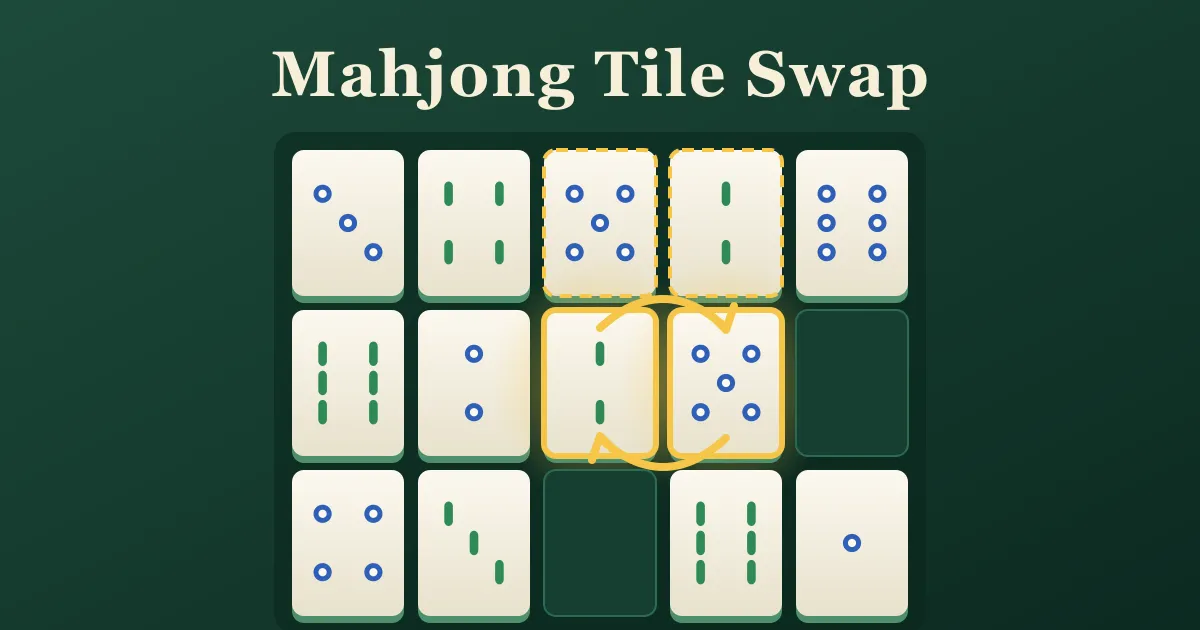
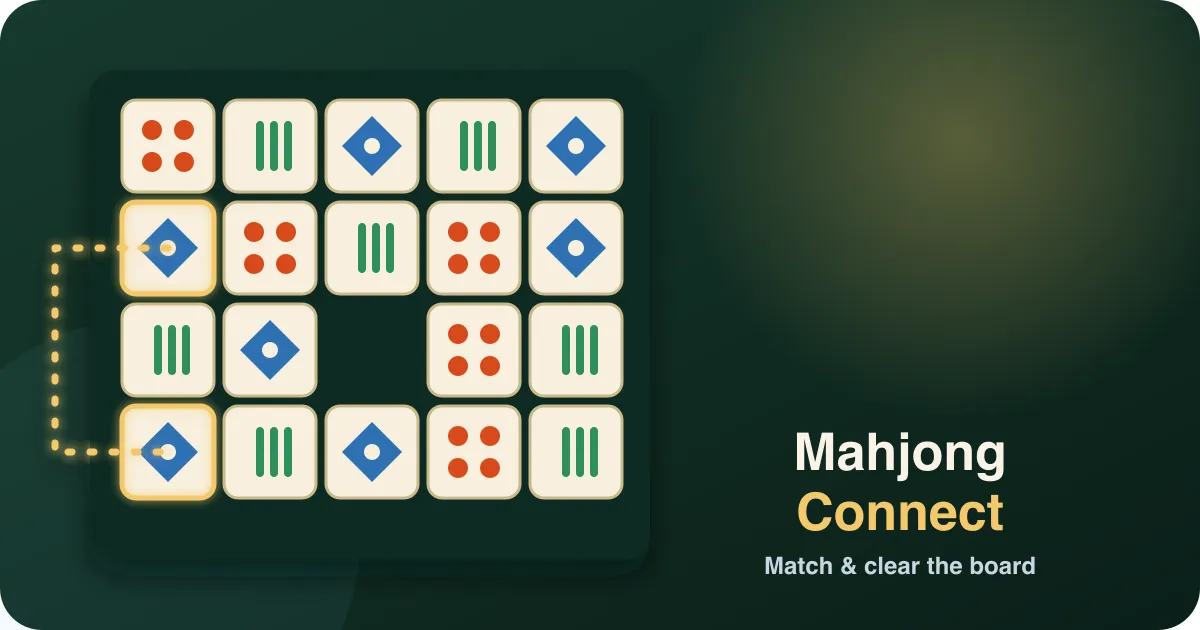
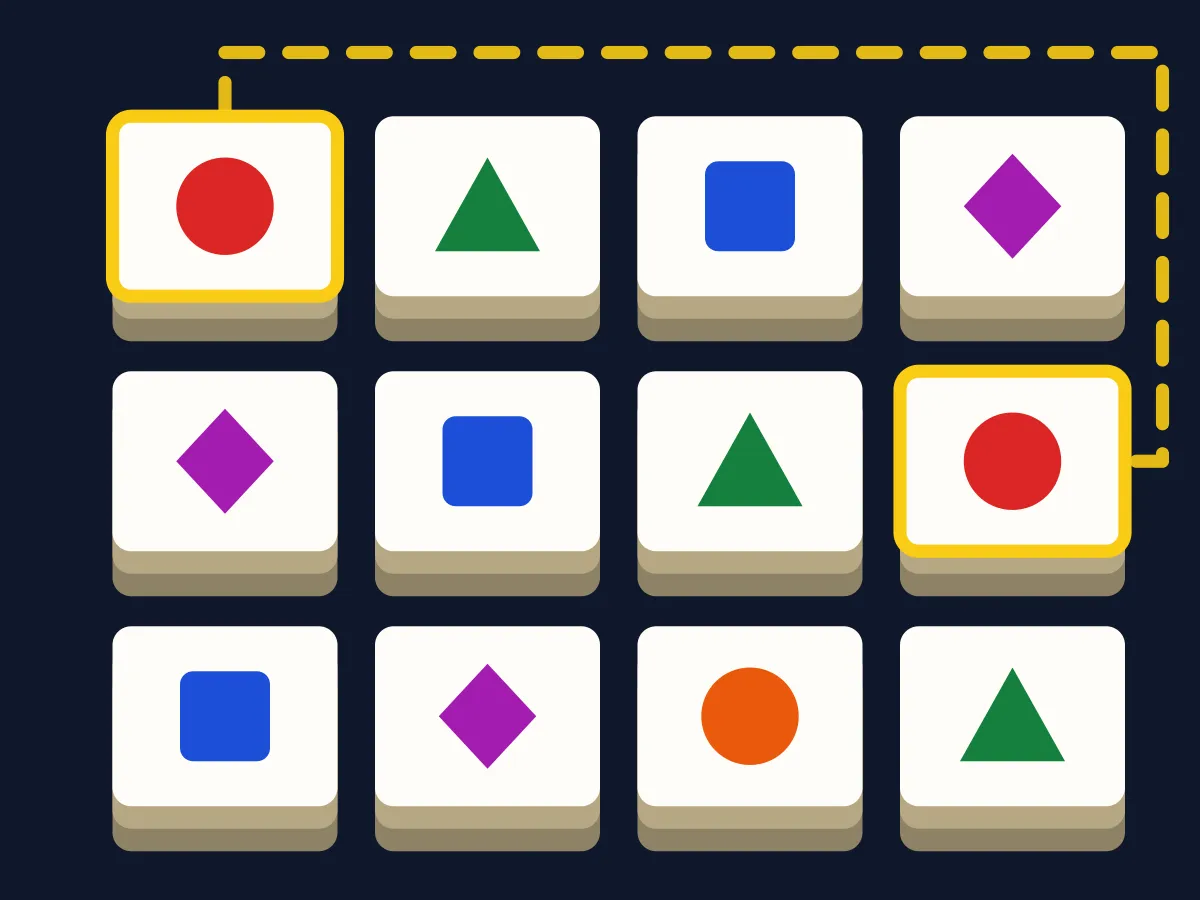
Mahjong Solitaire is a matching game: you remove free pairs of identical tiles from a stacked layout until the table is clear. Mahjong 2048 uses the same tiles for a sliding merge puzzle, so the skill is planning where tiles end up, not spotting pairs. If you want the matching game, Mahjong Solitaire and Mahjong Connect are both on this site.
Can I undo a move?
Yes, as many times as you like — the Undo button, U or Ctrl+Z, even after the game ends. The tile that appears after a move depends only on the move number, so undoing and repeating a move brings the same tile; undo lets you try another direction, not re-roll a bad spawn.