





Home / Quiz / Brain Teaser Riddles
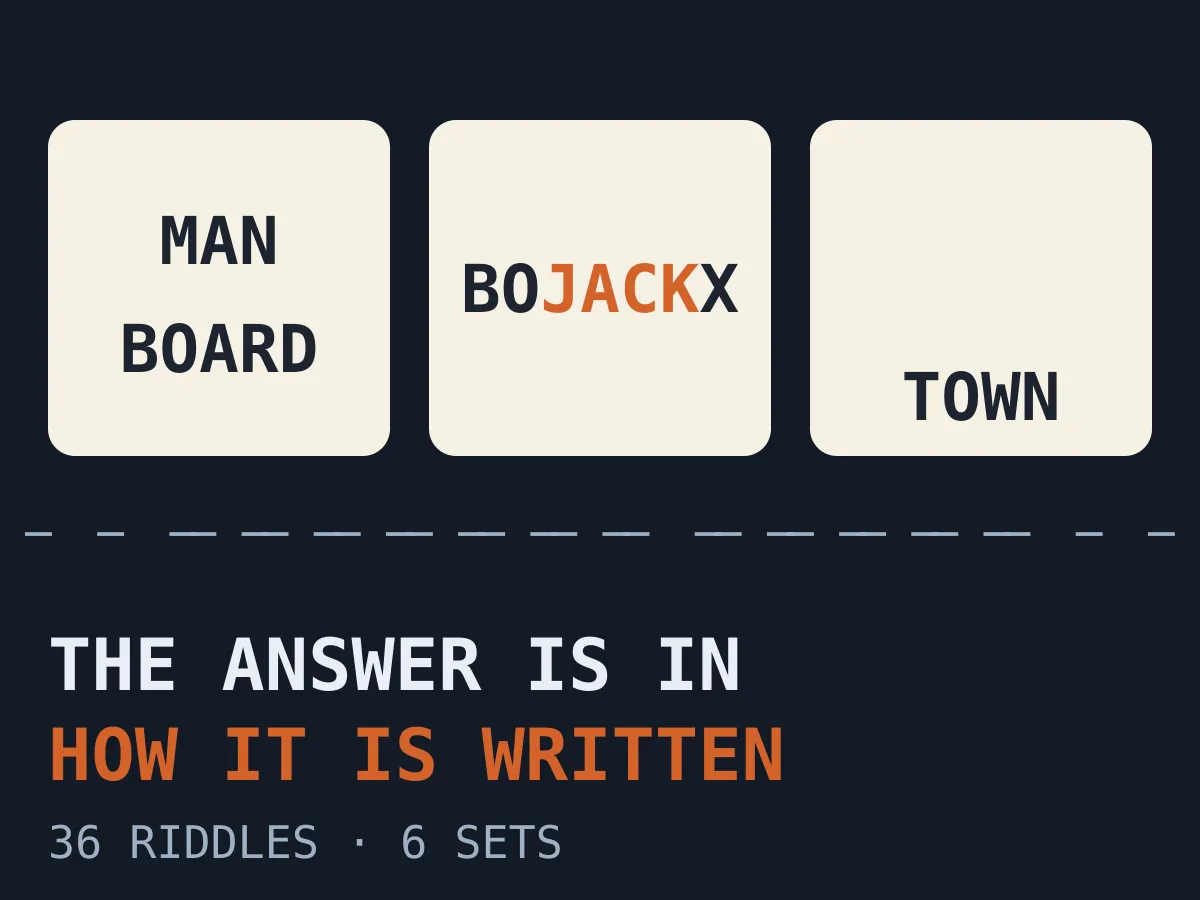
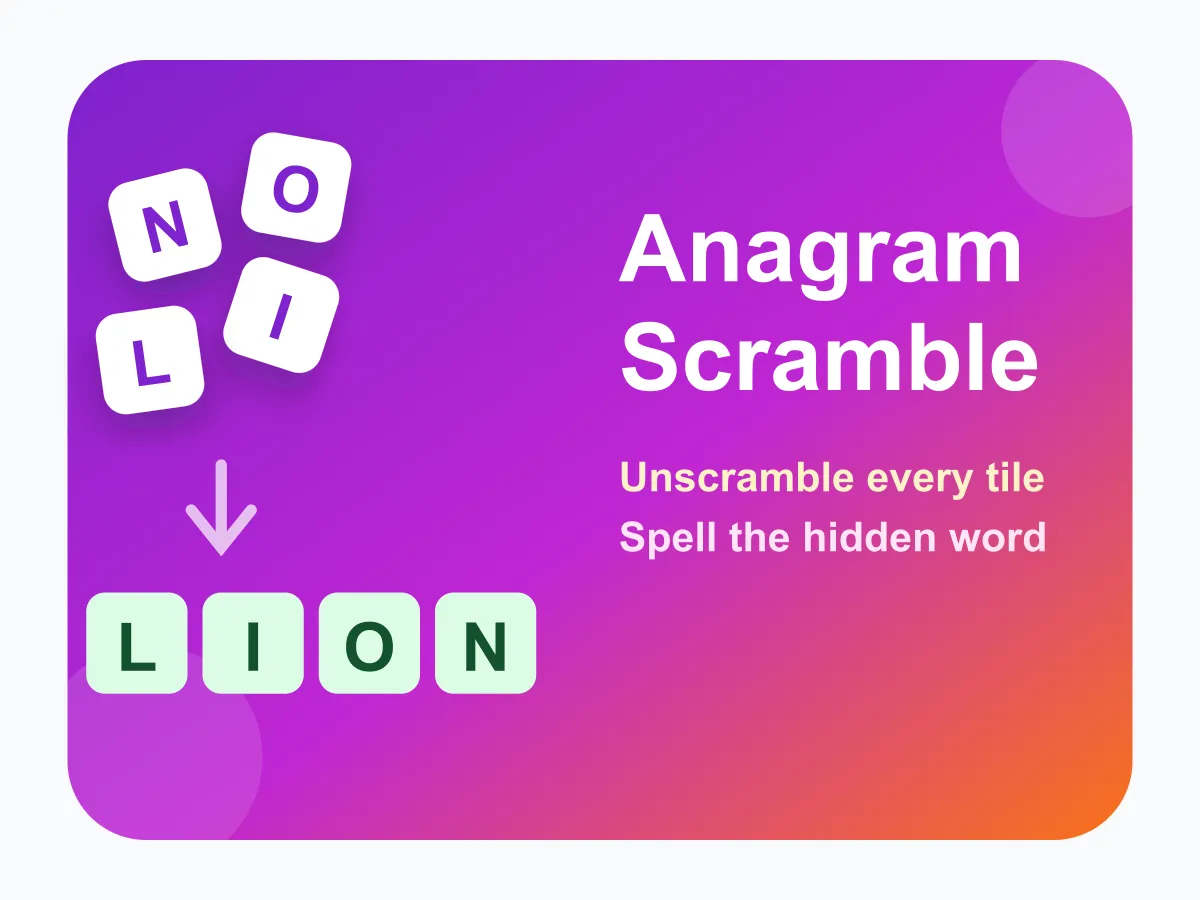
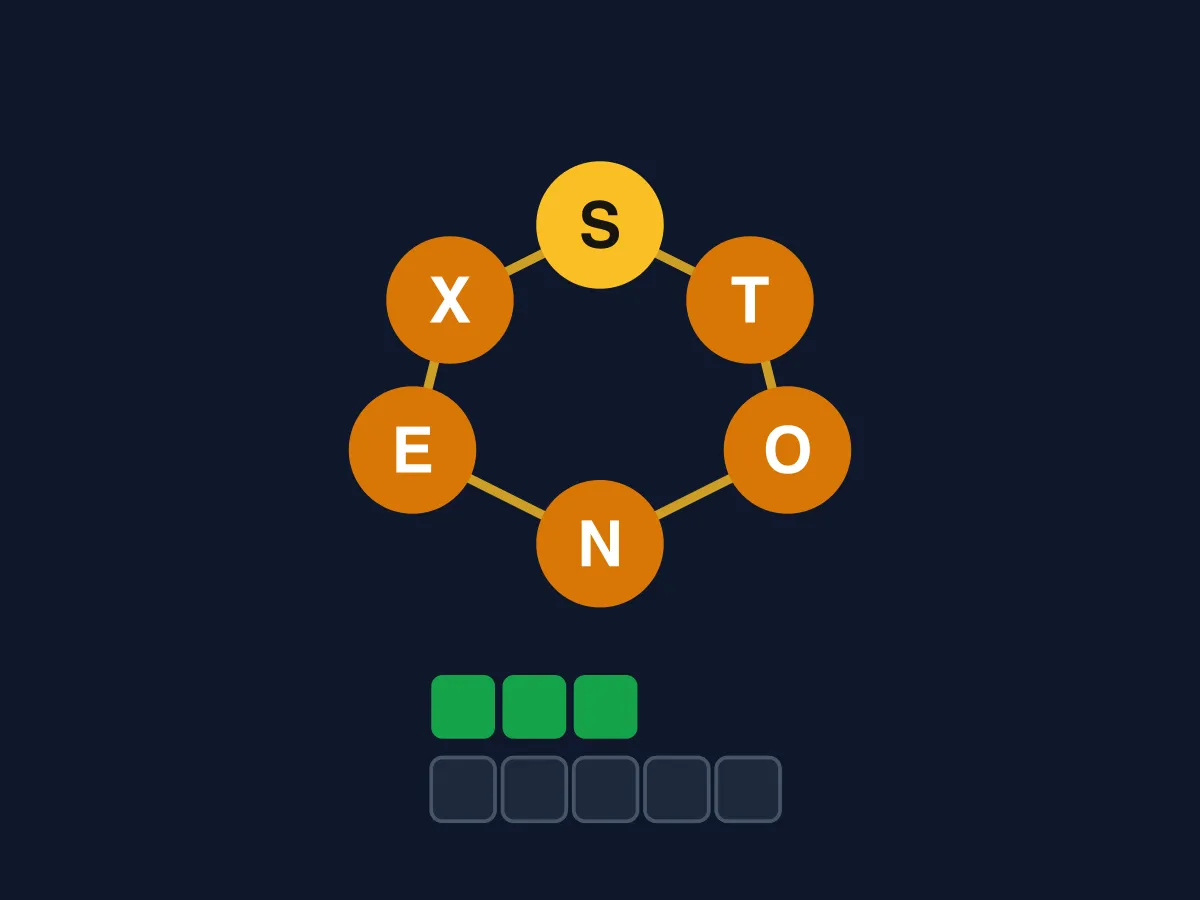
Brain Teaser Riddles is a free online riddle game you can play instantly in the browser, with no download and no account. Every riddle is a short piece of writing that describes something in a way that is entirely true and entirely misleading at once, and your job is to work out what it is describing. You do not type the answer: you build it from a tray of letter tiles holding the answer's own letters plus a handful of decoys, dropping them into a row of slots. That changes the puzzle in two useful ways — the number of slots tells you how long the answer is, and a word like CHAMELEON can never be lost to a spelling mistake. Sixty riddles are grouped into twelve themed packs of five, from things around the house and out in nature through wordplay, numbers, weather and a final Hard Five, and every one of them was written for this game rather than collected from anywhere. A hint pins the next letter in place for a quarter of the riddle's points, and giving up shows you the answer for none of them. Nothing is timed and there is no way to lose a pack — the only score is how much of it you worked out yourself.
How to play Brain Teaser Riddles
- Read the riddle at the top. Every one of them describes something ordinary in a way that is completely true but built to point you somewhere else.
- The row of empty slots underneath tells you exactly how many letters the answer has. That is a real clue, not decoration.
- Tap a letter in the tray to drop it into the next empty slot. You can also just type on a keyboard — a key press claims the matching tile from the tray.
- The tray always holds every letter the answer needs, plus three to five decoys that it does not. Short answers get more decoys, so a three-letter word cannot simply be read off the tray.
- Tap a letter you have already placed to take it back, or use Clear to empty the row in one go. Backspace does the same thing from a keyboard.
- The answer is checked automatically as soon as the last slot fills. There is no submit button, and getting it wrong just hands your letters back.
- Hint pins the next letter of the answer permanently in place and shows you a plain-English nudge about what kind of thing you are looking for. It costs a quarter of the riddle's points.
- Give Up shows you the answer and moves on. The riddle scores nothing, but you still get to read the answer rather than being stuck.
- Each riddle is worth 100 points, less 25 per hint and 10 per wrong attempt, and never less than 20 if you solve it. Five riddles make a pack worth 500.
Tips
- Count the slots before you start thinking. Knowing the answer is four letters rules out most of what first comes to mind, and it is the cheapest clue in the game.
- Look at the tray for unusual letters. A Q, a W or a double letter narrows the field enormously, and the decoys are drawn from ordinary letters so a strange one is almost always real.
- Take the riddle literally, then take it figuratively, then try it as a pun. Almost every one in this set is exactly one of those three, and knowing which kind you are looking at is most of the work.
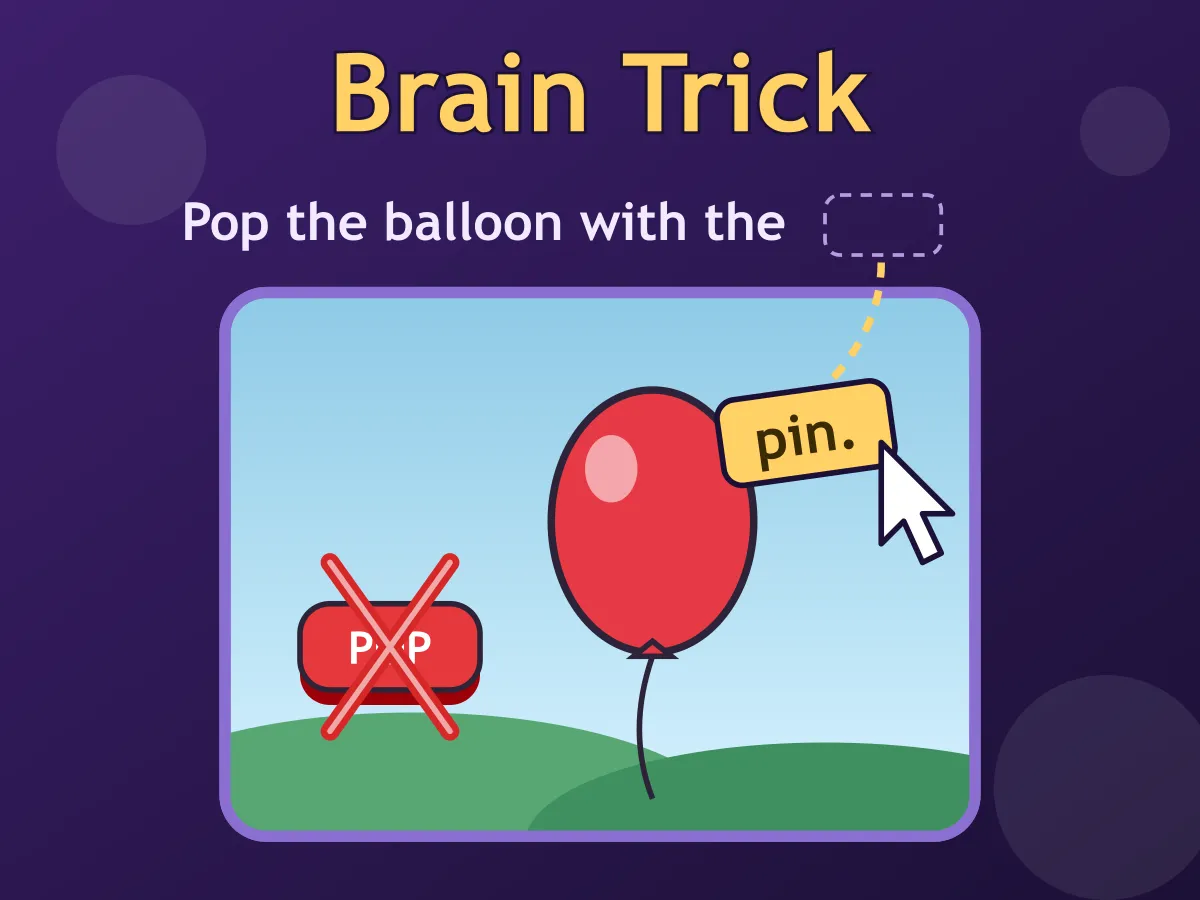
- When a riddle mentions a body part that things do not usually have — a mouth, a face, a foot — it is describing an object by borrowing the word. That family of riddle appears in several packs.
- A hint is worth taking early rather than late. Twenty-five points is the same price whenever you spend it, and the first letter narrows the answer far more than the fourth does.
- If you are close but not right, do not clear the whole row. Take back one or two letters and try the swap — wrong attempts only cost ten points each.
- The wordplay pack rewards writing the letters out. Riddles that talk about removing or adding letters are usually asking you to do it on paper rather than to think laterally.
- A pack you have already finished can be replayed for a better score, and the tray reshuffles so it does not simply repeat itself.
FAQ
Is Brain Teaser Riddles free to play?
Yes. It runs in your browser with no download, no sign-up and nothing to buy. All sixty riddles are here, unlocking a pack at a time as you finish them.
How many riddles are there?
Sixty, grouped into twelve packs of five by theme: around the house, wordplay, nature, numbers, the body, time, the kitchen, animals, weather, school, places, and a final harder mix.
Where do the riddles come from?
They were written for this game. A few use riddle shapes that have been around for centuries — the object described as if it had a body, the word that changes when you take letters off it — but the wording is ours, and no riddle in the set gives its own answer away inside its text.
Why do I have to build the answer from letters instead of typing it?
Two reasons, both practical. The tray shows you how long the answer is and roughly what it is made of, which is a fairer clue than a blank box. And it removes spelling out of the equation entirely — nobody should lose a riddle because they were not sure how many Ls are in CHAMELEON.
What are the extra letters in the tray for?
They are decoys, and they are there so the tray is not simply the answer waiting to be rearranged. Short answers get five of them and long ones three, which keeps a three-letter word from being readable straight off the tiles.
Is there a time limit?
No. Nothing is timed and nothing counts down. You can sit on one riddle for as long as you like, and a pack can be left half-finished and picked up later.
What happens if I get an answer wrong?
The row turns red for a moment and the letters go back to the tray, keeping any that a hint pinned in place. It costs ten points and nothing else — there is no lives system and no way to fail a pack.
Are the riddles suitable for children?
Yes. Everything in the set is family-friendly, and the answers are everyday objects, animals, weather and words rather than anything obscure. The early packs are gentle enough for primary-school readers; the last pack is written for adults.
Does Brain Teaser Riddles work on a phone?
Yes. Tapping the letter tiles works the same as clicking, and the tray wraps to two rows on a narrow screen rather than shrinking the tiles below a comfortable tap size.