



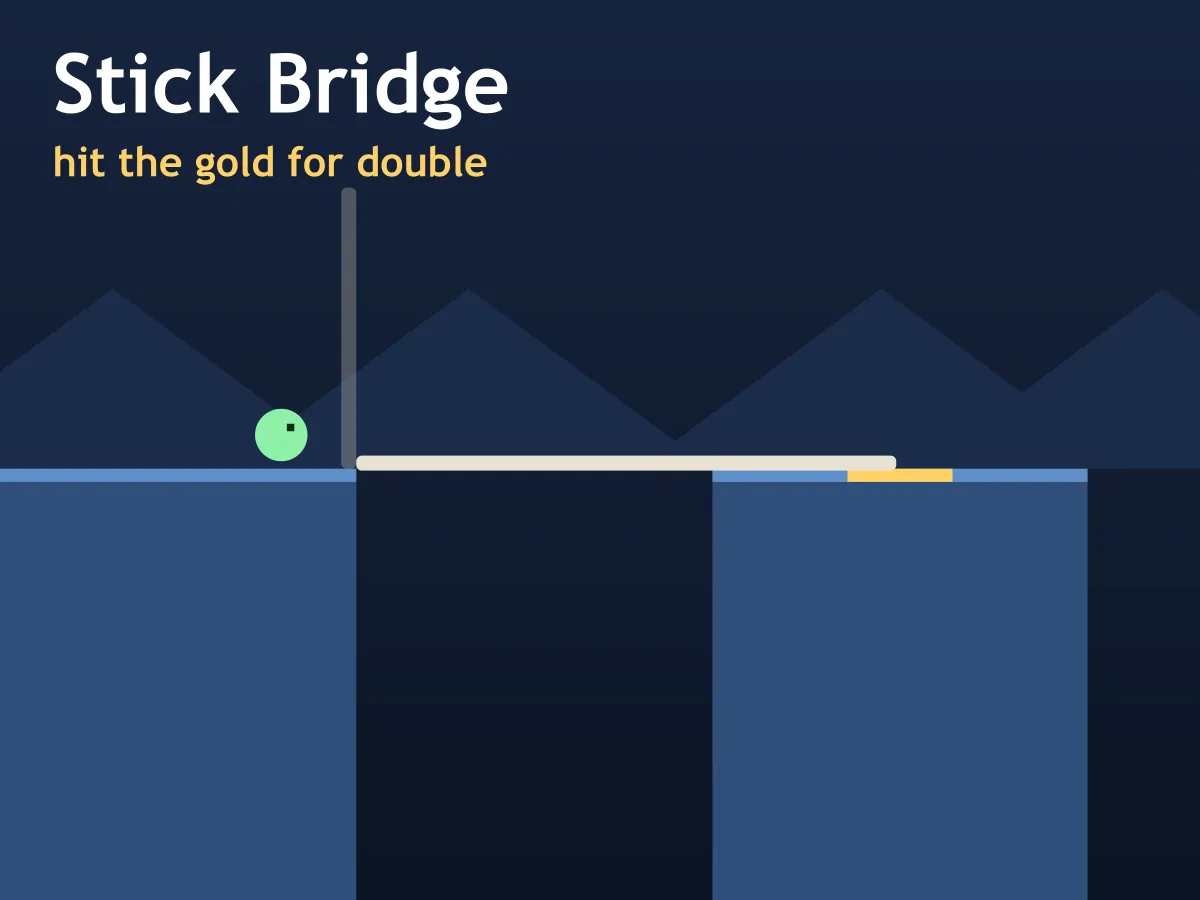


Block Jump is a free online one-button jumping game: a hopper stands on a pillar, you hold the button to charge and release to leap to the next one. Distance is linear in how long you held, so nothing is random about the jump itself — a gap is a length of hold, and learning a level means learning those lengths. Landing anywhere on the next pillar scores one point; landing on the centre nick scores two. Fall short or overshoot and the run ends. Ten levels tighten the pillars from a comfortable garden wall down to needle points on a skyline, and every gap is generated inside the jump window at both ends, so a gap is never too wide to reach and never too narrow to clear either. Runs in the browser with no download and no account.
How to play Block Jump
- Your hopper stands on a pillar. The next pillar is somewhere to the right.
- Hold the big button — or the space bar — to charge. The bar above it fills as you hold.
- Release to jump. The distance is exactly proportional to how long you held, from a short hop at an instant release to a long leap at a full charge.
- Landing anywhere on the next pillar scores one point and moves you along.
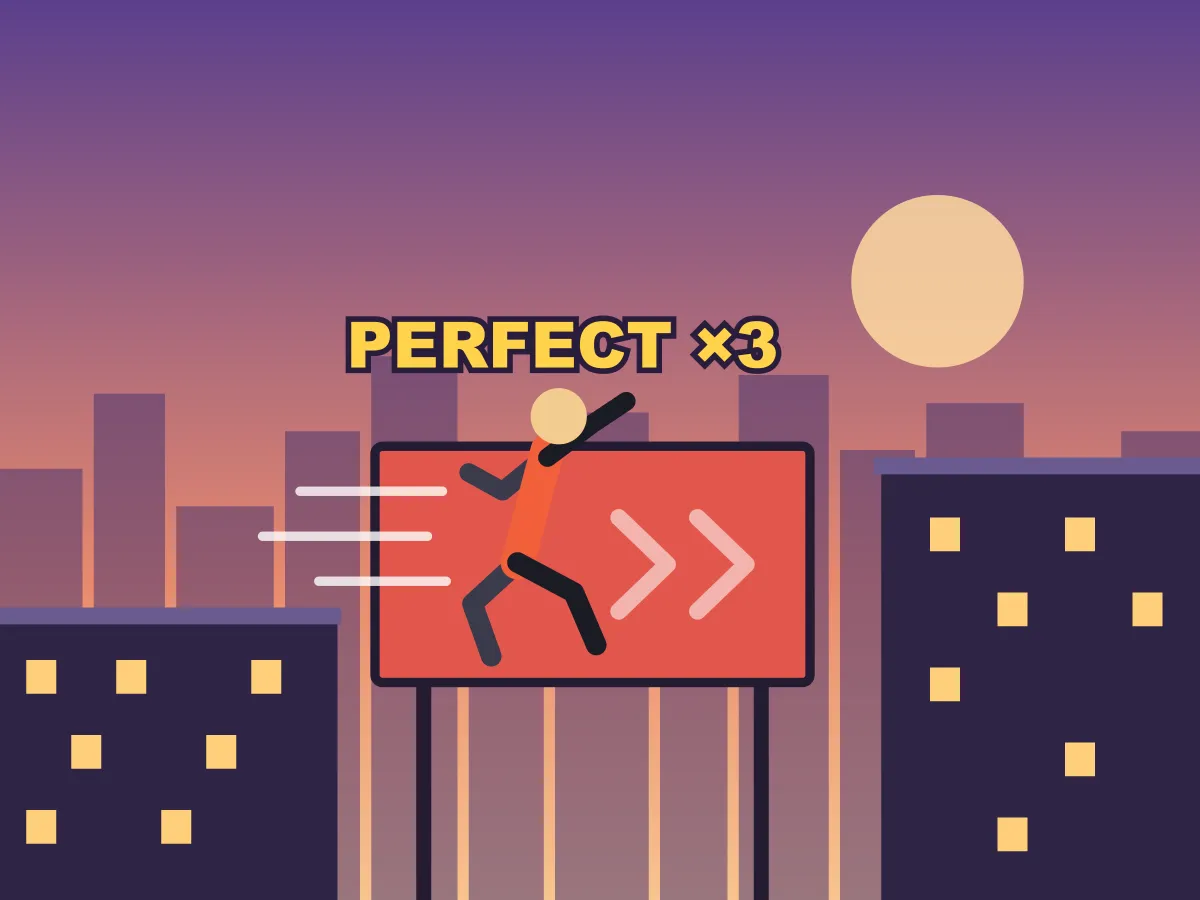
- Landing on the gold centre nick is a perfect and scores two.
- Falling short or overshooting ends the run — there is no safe landing back on the pillar you left.
- Clear the level by landing the number of pillars shown in the header.
- Stars come from perfect landings, not from finishing: six in ten centres is three stars.
Tips
- Charge in beats, not by feel. Counting a short-short-long rhythm is far more repeatable than trying to judge distance, because the charge really is linear.
- A narrow gap needs a shorter hold, not a faster tap. The shortest jump in the game comes from an instant release, so tapping quickly on a tiny gap will still overshoot.
- Watch the charge bar rather than the pillars while you hold. Its fill is the number that decides the jump.
- Aim for the centre nick from the start. Perfect landings are the only route to three stars and they cost nothing extra.
- The camera eases rather than snaps, so wait a beat after landing before charging — reading the next gap while the view is still moving is where most misses come from.
- Gaps ramp up inside a level: the last few pillars of a level are its widest, so bank the early ones cleanly rather than rushing.
- Replay keeps the same skyline and New Skyline deals a different one, so a level you keep failing can be practised as a fixed sequence.
FAQ
Is Block Jump free to play?
Yes. It runs in the browser with no download, no sign-up and nothing to buy. All ten levels are included and unlock in order.
Is the jump random at all?
No. Distance is a straight line function of how long you held the button, with no variation added. The pillars are generated from a seed, so Replay gives you exactly the same skyline to practise on.
Can a gap be impossible?
No, and it is checked in both directions. Every gap is generated inside the jump window — never wider than a full charge can reach and never narrower than the shortest jump can clear. The second one matters more than it sounds, because a gap under the minimum jump looks like a tapping problem when it is actually unreachable.
What does the gold nick on each pillar mean?
It marks the centre. Landing within a narrow band around it is a perfect landing, worth two points instead of one, and perfect landings are what the star rating counts.
What happens if I fall short?
The run ends. There is no landing back on the pillar you jumped from, which is what makes a short gap dangerous rather than free.
How is this different from the other one-button games here?
Precision Stop asks you to stop a marker that is already moving, so you are reacting to something. Perfect Stack drops a swinging block and a bad drop shrinks the tower instead of ending it. Neon Rhythm Dash uses a fixed jump, so the skill is when to press rather than how long. Here the jump length itself is the only variable and nothing on screen moves until you release.
Does it work on a phone?
Yes, and it is built for it: the hold button spans the bottom of the screen where a thumb sits, and the whole playfield can also be held anywhere to charge.
Does the level get harder inside itself?
Yes. The gap range ramps across a level, so the first jumps of a level are never its hardest and the widest gaps arrive near the target.