


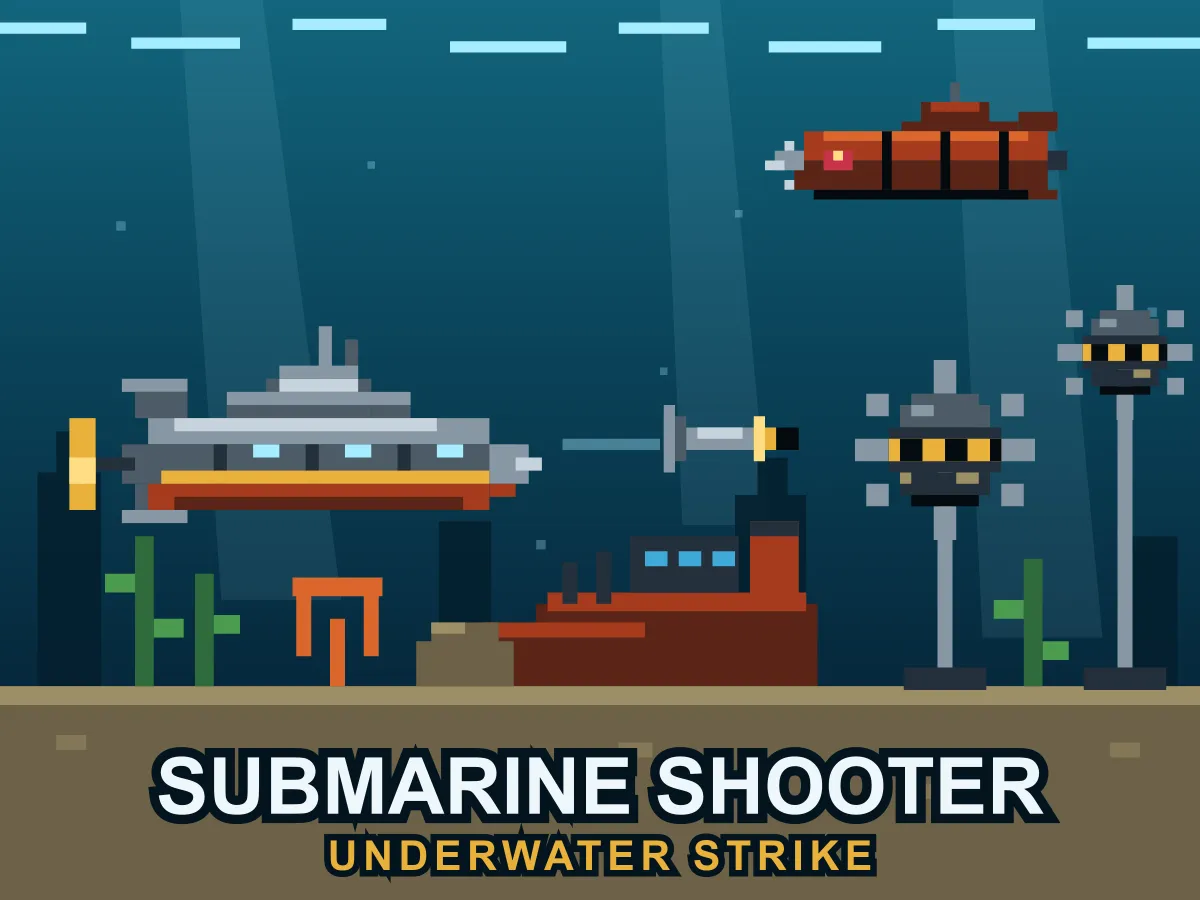



Tidecutter is a free 3D naval roguelite you play straight in your browser, with no download and no account. You captain one small sloop across three seas — the Jade Shallows, the Amber Reach and the Tempest Crown — and nine encounters stand between you and the last cursed flagship. Steering is the whole control scheme: hold anywhere on the water and the sloop sails towards it with real momentum, while its cannons pick their own targets and fire on their own rhythm. The surge is the other verb. It throws the boat forward, makes it briefly untouchable, and drops a line of powder charges in its wake that detonate a second later — so the same button is both your dodge and your heaviest weapon, and you can rarely afford both. Clear the water and you draft a refit from three — more barrels, a wider blast, a thicker hull — and a sunk flagship pays two cards instead of one. Those choices stack for the rest of the run. Nothing else patches your hull except the crates that float out of a wreck and the bonus for finishing a fight untouched, so a sloop that keeps getting hit stays hit, and a sunk one starts the voyage again from the shallows.
How to play Tidecutter
- Press Play, then Cast off. You start in the Jade Shallows with one small sloop, a full hull and no refits at all.
- Steer by pointing. On a desktop just move the mouse over the water — no button to hold for a whole run — and the sloop sails towards the cursor, turning at its own rate and carrying its speed, so plan the turn before you need it. On a touchscreen, hold a thumb where you want to go; lift it and the boat coasts. WASD and the arrow keys steer directly if you prefer them, and they take over the moment you press one.
- Your cannons aim and fire on their own. They pick the closest hull in range, lead their shot, and reload on a fixed rhythm, so there is no fire button and nothing to aim. Every decision you make is a steering decision.
- Surge is the button that matters. Tap Surge on screen, press Space, or right-click the water: the sloop bursts forward, cannot be hurt for a moment, and drops a line of powder charges behind it that explode about a second later. It is your only dodge and your biggest damage at the same time, and it needs a few seconds to recharge.
- Learn the four hulls that come at you. Red skiffs charge straight in and spend themselves ramming you. Amber gunboats hold their distance and shoot. Purple mortars stop and lob shells at a marked circle of water — sail out of the ring before it lands. A flagship blocks the end of each sea and fires rings of shot while it summons help.
- Clear the water and put in for refit. Three cards are offered — one cannon, one wake, one hull — and you take one: cannon refits kill at range, wake refits kill crowds, hull refits buy you the time to do either. Sink a flagship and you take two cards instead of one. They stack for the whole run, so a second Twin Barrel or a third Deep Wake compounds.
- Collect what sinks. Gold coins are plunder, green crates repair your hull, and an orange powder keg detonates the moment you scoop it — a blast twice the size of your own wake, and your surge handed straight back. Sinking hulls one after another builds a salvage streak that multiplies every coin they drop, and clearing an encounter without taking a single hit pays a bonus on top.
- Sink and the run is over; sink all three flagships and the voyage is won — expect that to take three to five minutes of sailing once you know the fights. Your best plunder is saved on your own device.
Tips
- Surging is not just an escape. Powder only exists where you surged, so the strongest habit is surging *through* a group rather than away from one — the charges land in the middle of the pack and detonate about a second later, and the immunity means the crossing itself is free.
- Watch the mortar circles, not the mortars. The red ring on the water is where the shell will land in a moment and it is drawn before the splash, so a shell is only ever a hit if you sail in a straight line. Turn early; the sloop carries its momentum and a late turn arrives inside the blast.
- Kill the gunboats before the skiffs when both are on screen. Skiffs are loud and fast but they die on the ram they land, and the hull they cost you is a fixed 12. Gunboats keep firing from range for the whole encounter, so a gunboat left alive is a bill that keeps growing.
- Every draft offers one cannon card, one wake card and one hull card, so the choice is always across families rather than within one. That is deliberate: a pure cannon build melts the flagships and gets swarmed in the Gauntlet, and a pure wake build clears crowds but cannot reach a gunboat that never closes. Flagships pay two cards, which is the one moment in a run you can shore up two axes at once — spend it on whichever one has been losing you hull.
- Twin Barrel is worth more than it looks early and less than it looks late. Extra barrels multiply against big single targets like flagships, while a second stack of Black Powder or Deep Wake scales against the six-skiff waves — take barrels while the fights are small, take blast size once the water fills up.
- The arena rim is a wall, not a hiding place. Sailing into it bleeds your speed and every hostile turns to follow, so a boat pinned against the rocks is a boat that cannot surge out. Fight nearer the middle where you have room to cross a pack and come back.
- Do not sail off the moment the last hull sinks. The water stays open for a few seconds so you can collect what it dropped, and a flagship leaves twelve pieces of salvage behind — seven gold at triple value, three repair crates and two powder kegs. Sailing straight to the refit panel throws all of it away.
- Go and get the orange kegs. They are the best thing in the water: opening one sets off a blast nearly twice the size of your own wake and hands your surge straight back, so a keg picked up in the middle of a pack often clears it outright. Gunboats and mortars drop them, flagships always leave two, and like every pickup they expire — a keg you sailed past is a wave you fought the hard way.
- Keep the kills coming. Every hull that sinks within three seconds of the last one raises your salvage streak, and the streak multiplies the gold each of them drops, up to triple. That is why a wake laid through the middle of a pack is worth more than the same three kills picked off one at a time, and it is most of the difference between a good score and a great one.
- An untouched clear is worth more than the fight itself. Finishing an encounter without taking a single point of damage pays a bonus and patches 18 hull, which in the opening sea is more than the clear bonus. When only one hull is left and you are unscratched, it is usually worth taking the long way round rather than trading a hit for a few seconds.
FAQ
Is Tidecutter free to play?
Yes. Tidecutter runs free in your browser with no download, no account and no in-game purchases. Your best plunder and the furthest encounter you have reached are saved on your own device.
Does Tidecutter work on a phone?
Yes. On a phone or tablet you steer by holding a thumb on the water where you want to sail, and the Surge button sits in the bottom-right corner within reach of the same thumb. Lifting your thumb lets the boat coast. On desktop the sloop follows the mouse cursor without any button held, and WASD, the arrow keys and Space work too.
What does roguelite mean here?
It means one continuous run rather than saved levels. You sail all nine encounters on a single hull that only ever comes back through repair crates and the bonus for a clean fight, you build the ship as you go by drafting a refit after each clear, and if you sink you start again from the Jade Shallows with nothing. What carries over between runs is what you have learned, not what you unlocked.
How long is a run?
A winning voyage runs about three to five minutes of sailing, plus however long you spend reading the refit cards between fights — the game is paused while that panel is open. Losing runs are shorter. A session is usually two or three runs rather than one long one.
How does the explosive wake work?
Surging drops a short line of powder charges along the path you just sailed. Each charge sits on the water for about a second and then detonates, damaging every hull inside its blast, and a blast that reaches a neighbouring charge sets that one off early so a surge through a pack goes up as one chain. Refits make the charges bigger, more numerous, more damaging or quicker to fuse.
What is the salvage streak?
A kill counter that keeps running as long as hulls keep sinking within about three seconds of each other. Each kill past the first raises a multiplier, up to triple, and that multiplier is applied to the gold every hull drops as it sinks. Let three seconds pass with nothing dying and it resets to nothing. It is the reason a wake laid through the middle of a pack scores far better than the same kills taken one at a time.
What are the orange barrels?
Powder kegs. Sailing over one detonates it immediately — a blast almost twice the radius and damage of your own wake charges, centred on your boat — and it refills your surge on the spot. It never damages you. Gunboats and mortars drop them sometimes, and every flagship leaves two behind, so the start of each new sea usually opens with one in your pocket.
Why can I not aim the cannons?
That is the design rather than a missing control. The guns pick the nearest hull in range and lead their own shot so the game can be played one-handed on a phone, which leaves steering as the only thing you actually decide. Where you sail decides what is in range, what is about to ram you and where your powder ends up.
Do I need to install anything?
No. The game renders with WebGL, which every current version of Chrome, Firefox, Edge and Safari supports. If the sea does not appear, hardware acceleration is usually switched off in the browser settings or the browser is in a restricted mode; turning it back on, or trying another browser, resolves it.