






Home / Sports / Physics Football
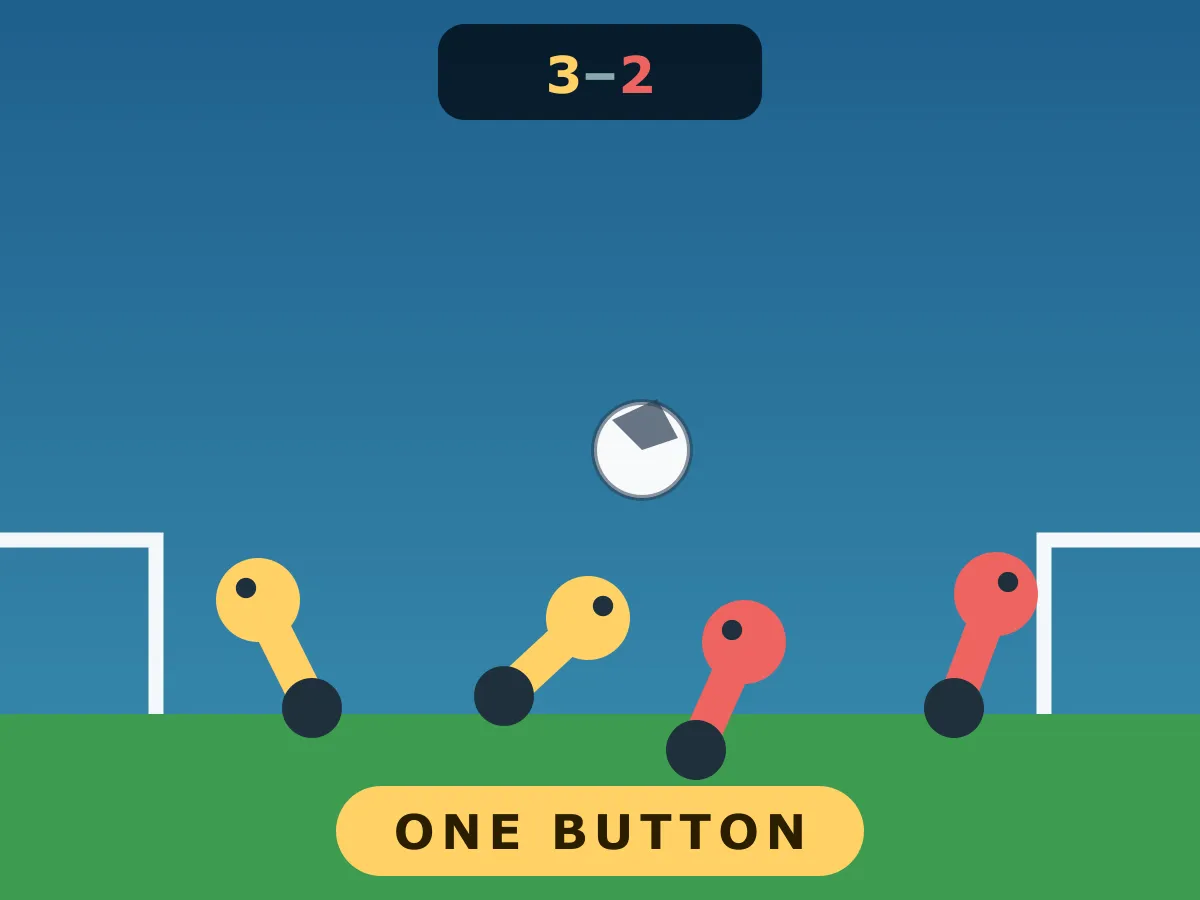
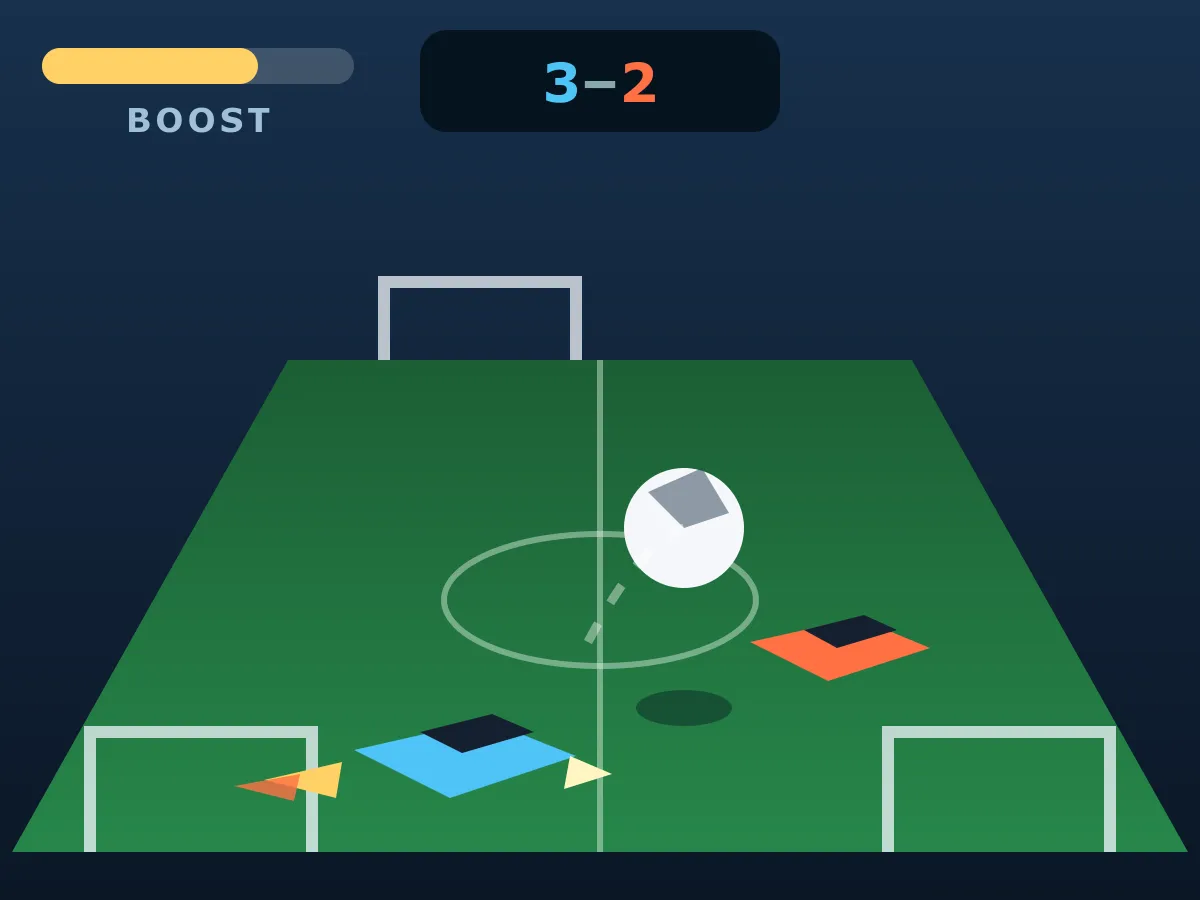
Physics Football is a free online ragdoll football game that runs in your browser with no download and no account. You have two players and exactly one control: a button that makes both of them hop at once, towards the ball, whether that is a good idea or not. There is no running, no aiming and no steering — every player is a head on a stick held together by physics, and everything that happens to the ball happens because somebody flung themselves at it and missed by slightly less than the other lot did. Goals are frequent, undeserved and extremely funny. You always need five goals to win a match, or to be furthest through your target when two minutes are up. What changes as you climb the ladder is how many the other lot need: eight at the Sunday League, then seven, six, five, four, and three in the final. That is a deliberate design decision and it came out of measurement rather than taste. Six opponents that differed only in how well they timed the button all finished within a couple of goals of each other over hundreds of simulated matches — in a ragdoll scramble, timing does not survive contact with the ball — and four separate attempts at building a ladder out of better opponents each produced a ladder that went the wrong way somewhere, because hopping further reaches the ball but scatters your own defence, and an opponent too weak to move turns out to be the hardest thing on the pitch to score past. A handicap cannot go the wrong way. Everything else about the other lot is exactly what you have.
How to play Physics Football
- You control two players, and you control them both with the same button. Press space, or the big button under the pitch, and they both hop.
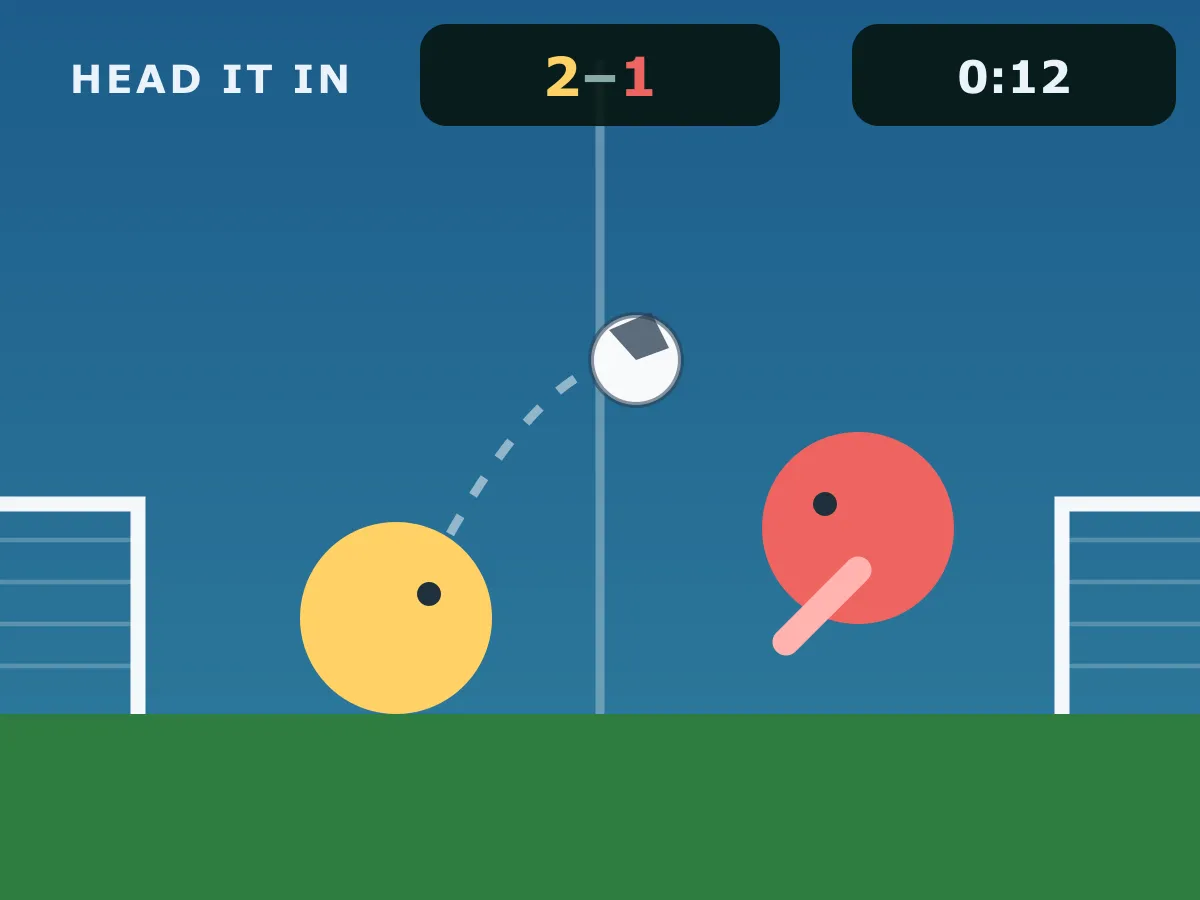
- A hop goes up and towards the ball. You do not choose which way — the game points them at the ball, because one button cannot say anything else.
- There is a short recovery after every hop. Holding the button down does not make anyone hop faster; it just means the next hop happens as soon as it can.
- Everything is physics. A body is a head on a stick, it tumbles when it lands badly, and it will happily knock the ball into its own net.
- The ball comes off heads, boots, bodies and the crossbar. Nobody has any control over where it goes and neither do you.
- A ball that crosses the line under the bar is a goal, whoever put it there. There are no own goals in the scoring — there are only goals.
- You win by reaching five goals. They win by reaching theirs, which is eight at the first opponent and three at the last. If neither side gets there in two minutes, whoever is furthest through their own target takes it, and dead level is a draw.
- The other side gets a beat to see the ball before it reacts, and that delay is a little shorter further up the ladder — though it is worth much less than it sounds, which is why the ladder is not built on it.
- What changes up the ladder is the target. You always need five; they need eight at the first opponent and three at the last, and it is on the scoreboard next to both scores.
- Beat an opponent to unlock the next. Progress is kept in your own browser.
Tips
- Do not hold the button down. The recovery means a held button hops on a fixed rhythm, and a rhythm is the one thing the ball is not on.
- Press when the ball is falling towards your players rather than when it is already past them — a hop takes a moment to get off the ground.
- A hop sends both of your players at the ball, which is often the problem. With the ball near your own goal that is two bodies flying at it from the wrong side.
- Landing badly is not a failure state. A body on its back still blocks shots, and it gets up on the next hop.
- Every opponent has exactly the same legs you do. Nothing up the ladder hops harder than you can; it just needs fewer goals than you to finish the job.
- The crossbar is your friend at the back and your enemy at the front. Half the goals in this game go in off something nobody aimed.
- If you are behind with thirty seconds left, press constantly. It is not a good strategy, but nothing here is, and it puts bodies near the ball.
FAQ
Is Physics Football free to play?
Yes. It runs in your browser with no download, no plugin, no sign-up and nothing to buy. The first opponent is open straight away and the rest unlock by winning.
Is there really only one button?
Yes. Space, or the big button under the pitch, and both of your players hop towards the ball at the same time. There is no running, no aiming and no second control.
Why can I not steer?
Because that is the game. Everything on the pitch is a ragdoll held together by physics, and a hop is the only input there is — so the ball ends up going wherever four flailing bodies send it.
How do the opponents get harder?
They do not. They play exactly as you do, with the same legs and the same button — what changes is how many goals they need. Eight at the first opponent, down to three at the last, against your five all the way. That is because a better ragdoll is not reliably a harder one: hopping further reaches the ball but scatters your own defence, and four attempts at a ladder of better opponents each went the wrong way somewhere.
So is it mostly luck?
Substantially, and that is not an accident. A ragdoll scramble is not a test of precision, so the game does not pretend otherwise: pressing well is worth something — in testing a good stand-in player took the fifth opponent 55 percent of the time against a poor one’s 38 — but the rest is the ball doing whatever four flailing bodies have just done to it.
How long is a match?
Two minutes at most. You need five goals and they need somewhere between eight and three depending on the opponent, and goals arrive often enough that most matches finish well before the clock does.
Do own goals count?
They count for whoever they went in against, exactly as they would in football — which in a game where nobody controls anything means a fair few of them.
Does it work on a phone?
Yes. The whole control scheme is one big button under the pitch, which suits a phone better than almost anything else here.