
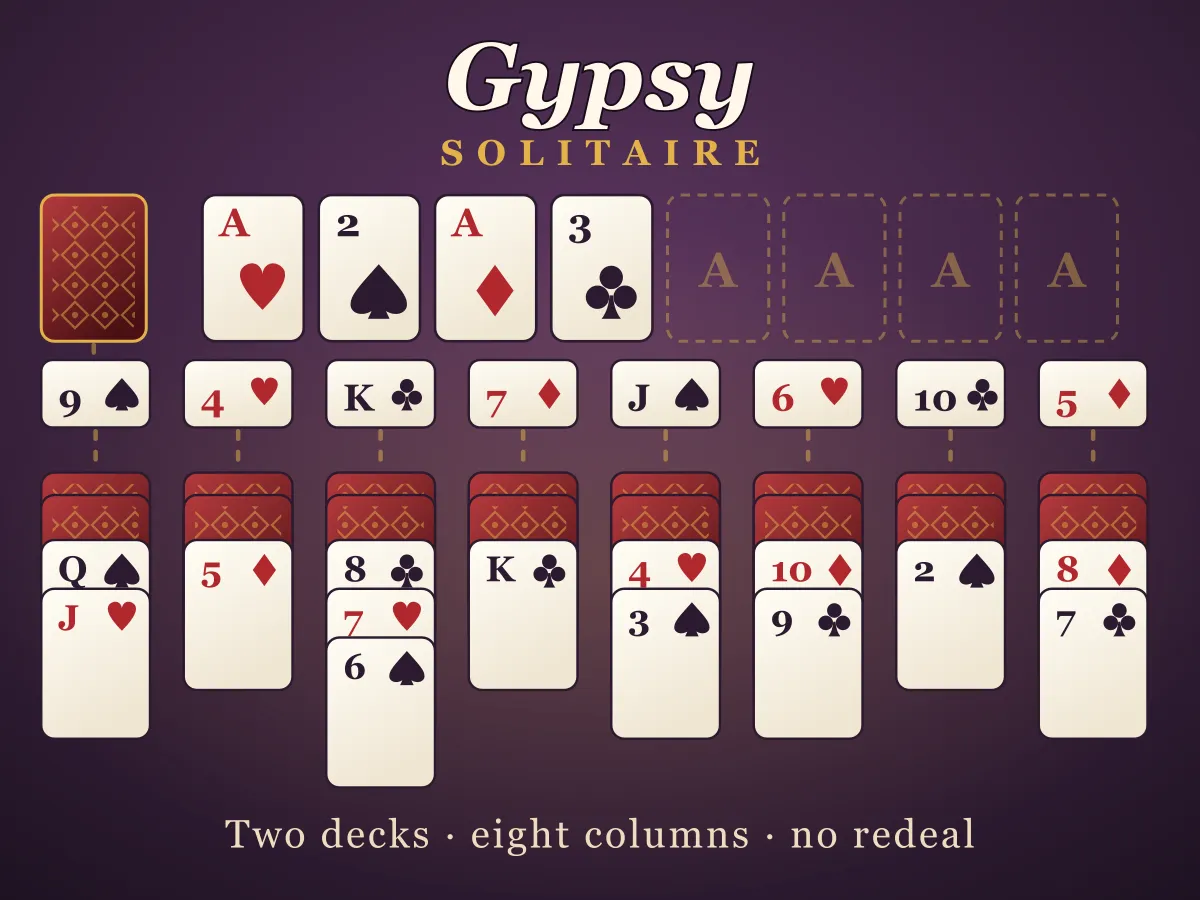



Gypsy Solitaire is the classic two-deck patience, free to play online in your browser with no download and no sign-up. Eight columns of three are dealt, two cards face down under one face-up card, and the other 80 cards wait in the stock. Build the columns down in alternating colours, move any run that is in order as one piece, and send all 104 cards to eight foundations, Ace to King in suit. Tapping the stock deals one face-up card onto every column at once, empty ones included, so a space only lasts until the next deal — and after ten deals the stock is spent, with no redeal. A foundation card may come back down to hold a card of the other colour. We measured the first 2,400 deals: our solver, which can see the face-down cards and the stock, finds a win in 1,709 of them, about seven in ten, while a careful player who sees only the face-up cards wins 237, about one in ten. Tap or drag to move, undo every move, ask for a hint, or switch to Winnable deals for games the solver has already won.
How to play Gypsy Solitaire
- Gypsy uses two full packs shuffled together, 104 cards. Eight columns of three are dealt: two cards face down with one face-up card on top. The other 80 cards wait in the stock. Your goal is to move all 104 cards onto the eight foundations at the top.
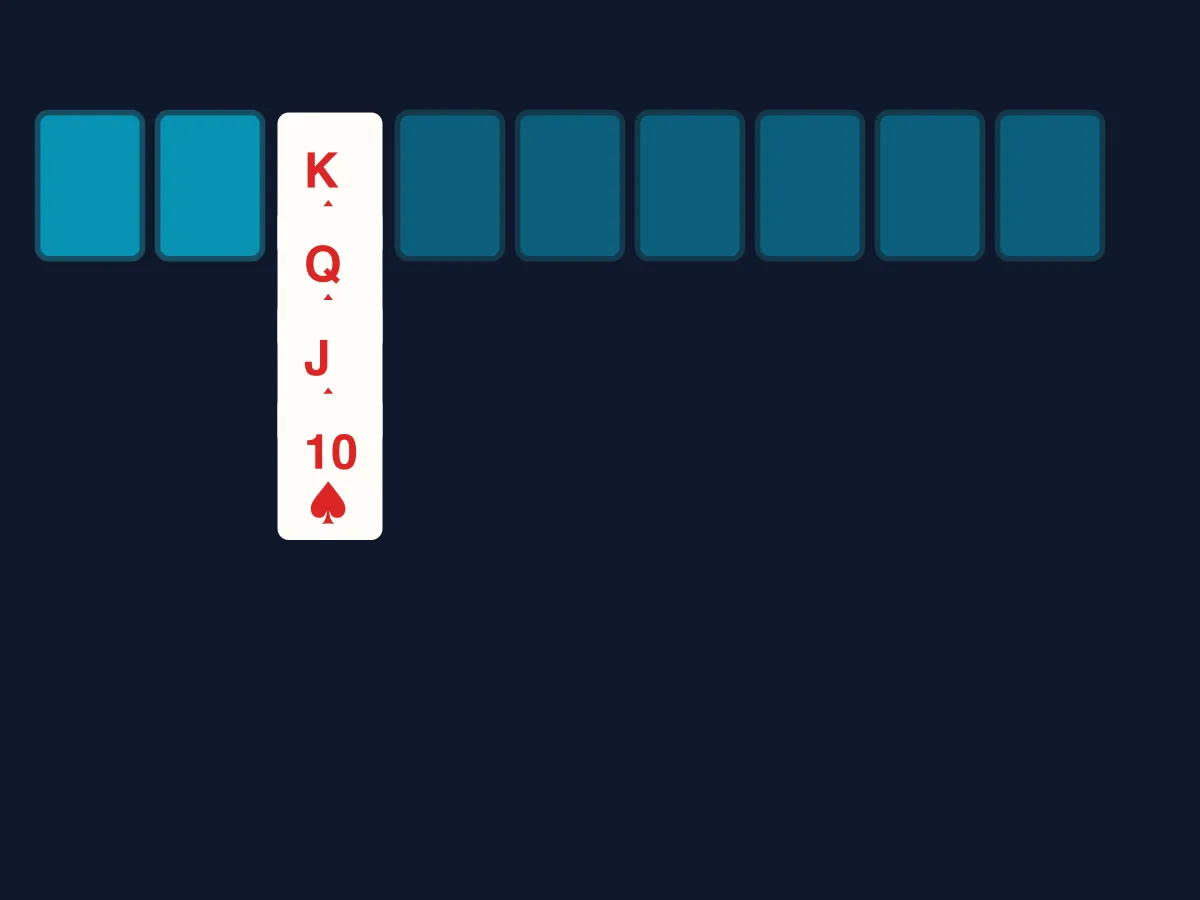
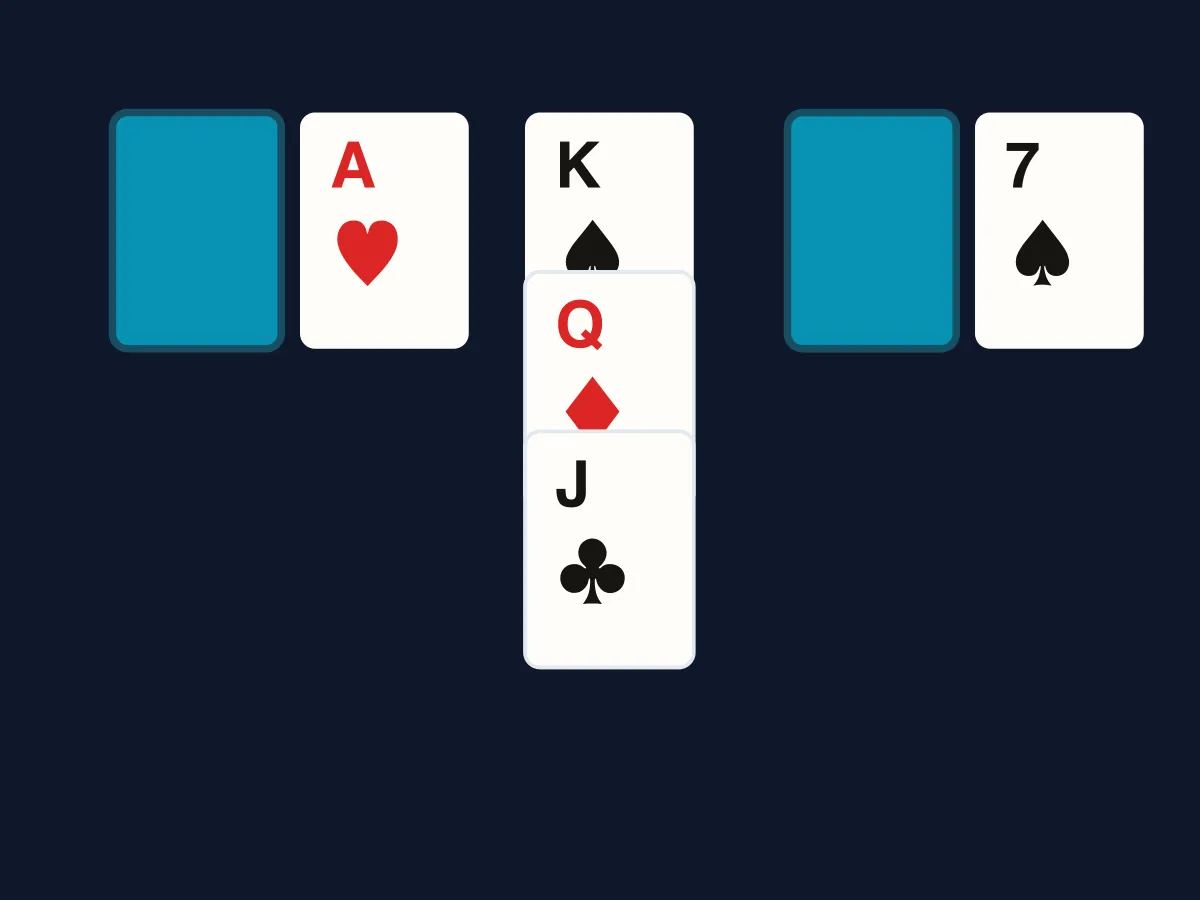
- In the columns, build down in alternating colours — a red 6 on a black 7, a black Queen on a red King. A run that is already in that order moves as one piece: pick it up by any of its cards. When the last face-up card leaves a column, the card underneath turns face up.
- Any Ace starts an empty foundation, and each foundation then builds up in its suit from Ace to King. Every suit gets two foundations. Cards go home one at a time, from the top of a column.
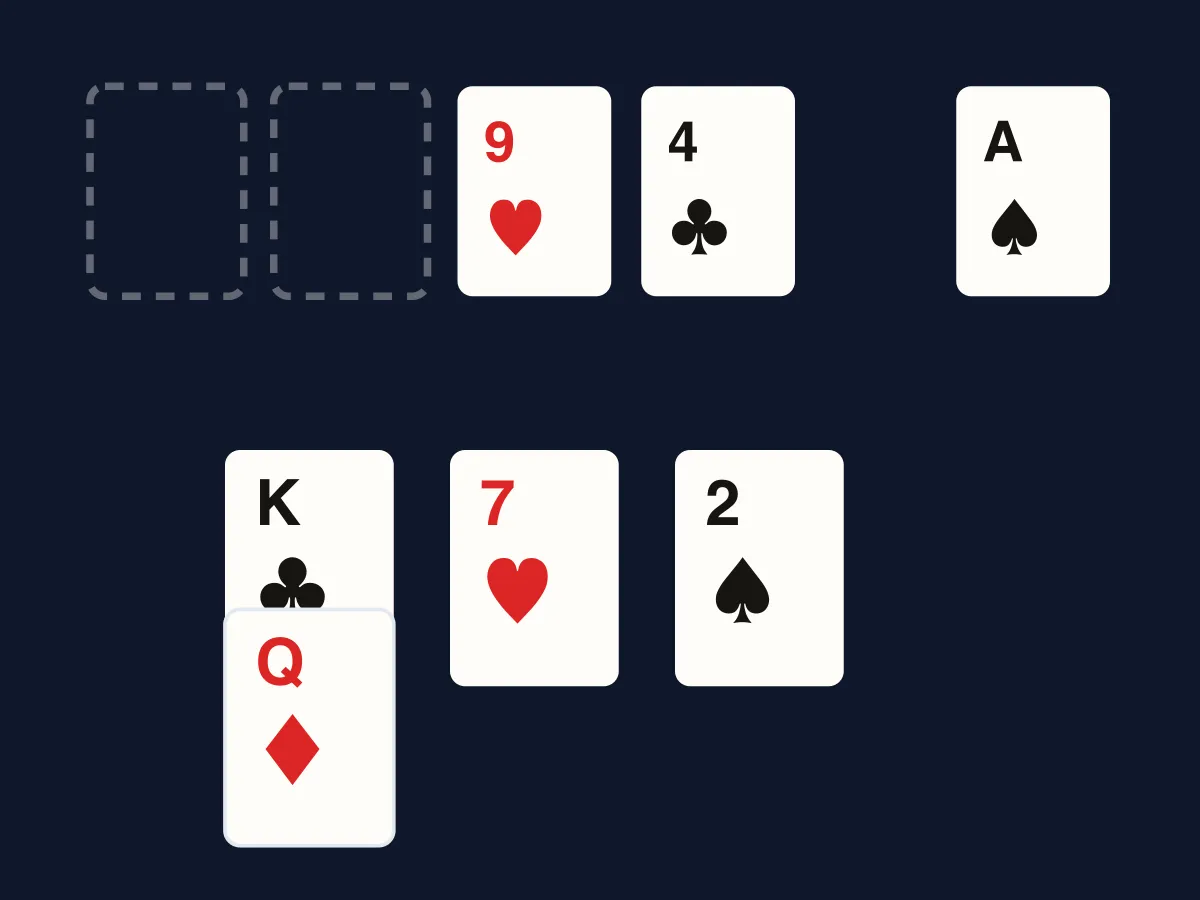
- An empty column takes any card or any run. But when you tap the stock, it deals one face-up card onto every one of the eight columns at once, empty ones included — so a space only lasts until the next deal. The 80-card stock gives exactly ten deals, and there is no redeal.
- A foundation’s top card may come back down onto a column when you need a card of that colour to build on. The game sends Aces and Twos home by itself, and any other card once both foundations of each other-colour suit already hold the rank below it, because nothing left out could ever need it.
- You win when all 104 cards are home. When the stock is spent and nothing more can reach a foundation or turn a card over, the deal is lost: undo, replay the same deal, or start a new one.
Tips
- Make every move you want before you deal. A deal drops a card on all eight columns at once, so a run you meant to move or a card you meant to free gets buried under a new card — and there are only ten deals in the whole game.
- Do not spend an empty column on a single card just because you can. The next deal fills it again anyway, so a space is best used to move a long run or to reach a face-down card in one go.
- Turn face-down cards over early. Each column starts with two hidden cards, and they are usually what blocks a suit later. Choose the moves that empty a column down to its buried cards.
- Keep the colours apart in your head: with two of every card, there are usually two places a card could go. Put it on the column you are less likely to need to dig through soon.
- Bring a card back down from a foundation when it lets a run join up or frees a buried card — then send it home again. The game will not let you pull down a card that nothing left out could ever need.
- Use Hint when you are unsure. The hint asks a solver that can see the face-down cards and the stock; when it finds a winning line, tapping the hinted card follows that line move by move.
FAQ
Is Gypsy Solitaire free to play?
Yes. Gypsy Solitaire is completely free to play online in your browser, with no download, no account and no in-game purchases.
Does Gypsy Solitaire work on mobile?
Yes. It works on phones and tablets as well as computers. Tap a card to move it to its best place, or drag it where you want it; the table rearranges itself for a phone held upright or on its side.
How do you play Gypsy solitaire?
Deal two decks into eight columns of three, two cards face down and one face up, with 80 cards left in the stock. Build the columns down in alternating colours, moving whole runs at once, and fill empty columns with any card or run. Tap the stock to deal one card onto every column. Win by building all 104 cards onto eight foundations, Ace to King in suit, before the ten deals run out.
How often can you win Gypsy Solitaire?
We measured the first 2,400 deals. Our solver, which knows the face-down cards and the order of the stock, finds a win in 1,709 of them, about seven deals in ten — and it gives up on some deals that can be won, so the true share is higher. A careful player who plans each round of moves but sees only the face-up cards, as you do, wins 237 of the same deals, about one in ten. Winnable deals mode deals only games the solver has won.
Can you move more than one card at a time?
Yes, in Gypsy any run of cards that goes down in rank in alternating colours moves as one piece, onto a column whose top card is one rank higher and the other colour, or into an empty column. You can pick a run up by any card in it, not only the bottom one. Cards go to the foundations one at a time.
What happens when you deal from the stock?
One face-up card lands on each of the eight columns at once, from left to right, including any empty columns. The 80-card stock deals exactly ten times and there is no redeal, so the stock button doubles as the game’s clock: the deals left are shown at the top.
Can I take a card back off a foundation?
Yes. A foundation’s top card can come back down onto a column, to hold a card of the other colour one rank lower. Aces, Twos and any card that nothing left out could ever build on stay home — the game would only send them straight back.
How is Gypsy different from Forty Thieves?
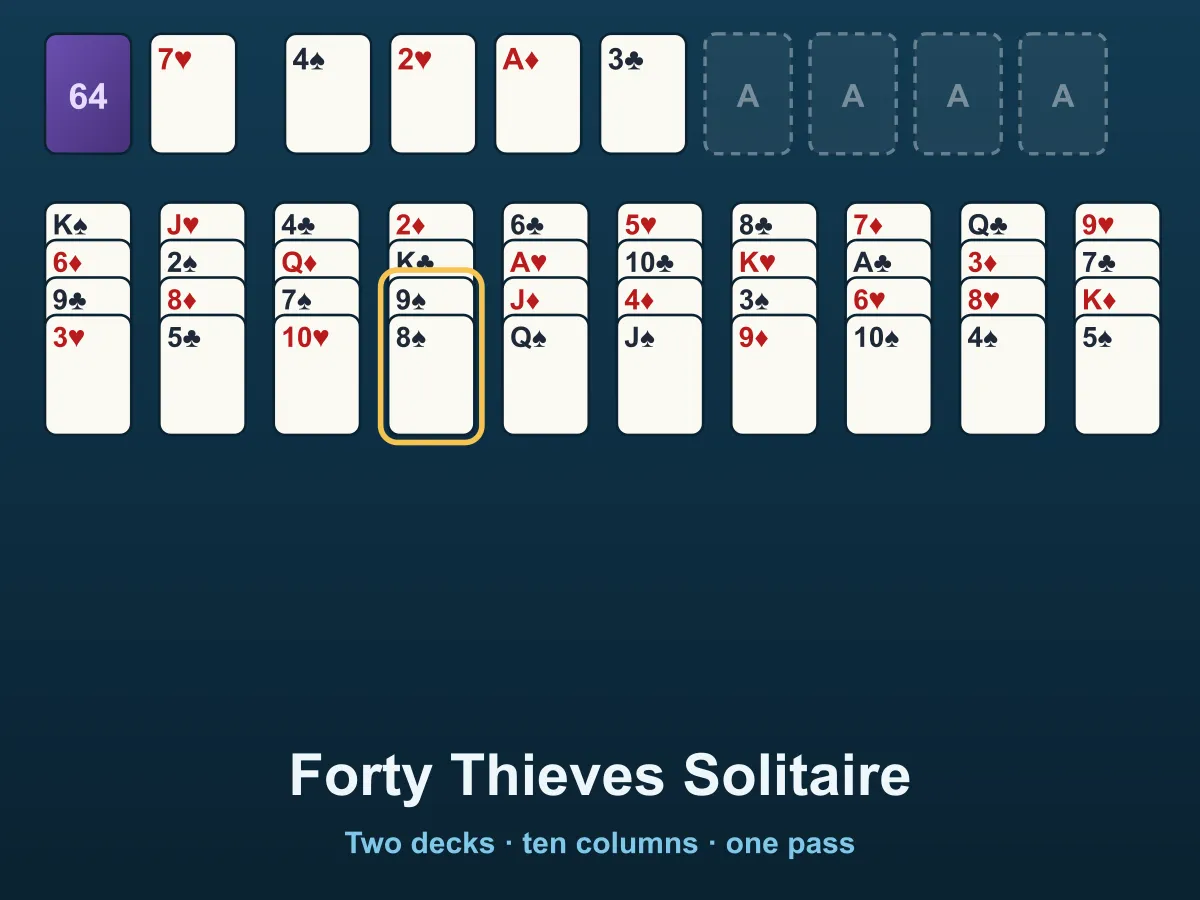
Both use two decks and eight foundations, but they play very differently. Forty Thieves deals ten columns face up, builds down in suit, moves one card at a time and turns the stock one card at a time onto a waste pile. Gypsy builds in alternating colours, moves whole runs, hides two cards under each column and deals its stock a row at a time onto the columns themselves, which makes it more forgiving to play and harder to plan.
Which rules does this Gypsy follow?
The rules in GNOME’s AisleRiot, which PySol’s Gypsy matches: two decks, eight columns of two face-down cards and one face-up card, 80 cards in the stock dealt one per column, alternating-colour runs moving as a unit, empty columns taking any card or run, cards allowed back down from the foundations, and no redeal.
How does the hint work?
The hint asks a solver that can see every card, including the face-down ones and the stock. When it finds a winning line from your position it shows the next move and says so, and tapping the hinted card plays it. If it does not find one in time, it suggests a sensible move a no-peek player would make. A winning line it shows never leads back through a position you have already played.
Can I undo, replay a deal, or play with a keyboard?
Every move can be undone, right back to the deal, even after a game ends. Every game has a number from 1 to 999,999, and the same number always deals the same cards, so Replay deal gives you the same game again. An unfinished deal is saved in your browser. With a keyboard, the arrow keys move between piles, Enter plays the top card, D deals a row, U undoes, H asks for a hint and N starts a new deal.