




Home / Card / Emperor Solitaire
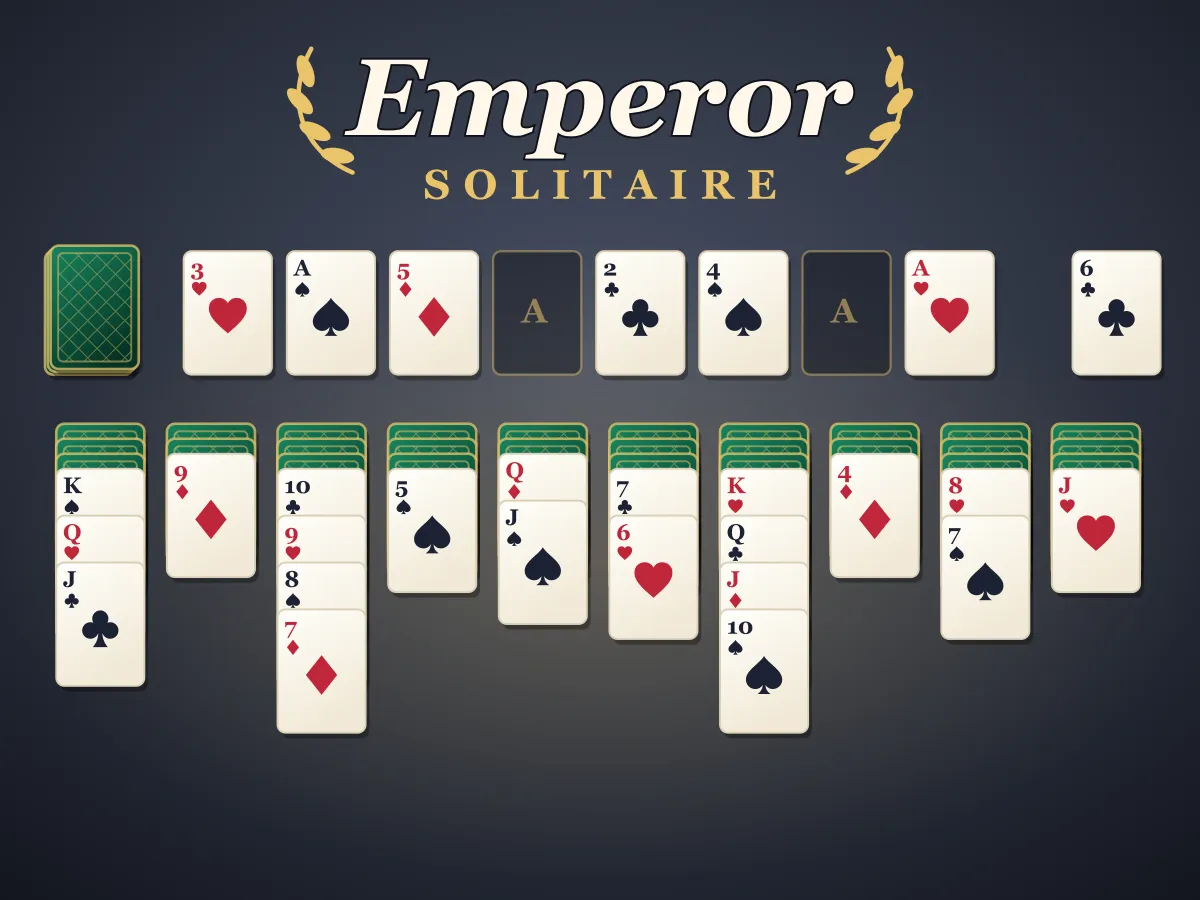
Emperor Solitaire is the classic two-deck patience of sealed packets, free to play online in your browser with no download and no sign-up. Forty cards are dealt into ten columns of four — three face down under one face-up card — and the other 64 wait in the stock. Build the columns down in alternating colours, move packed runs as a unit, turn the stock one card at a time with no redeal, and open each sealed packet as you clear the cards above it. Eight foundations, two for every suit, build up from Ace to King. Emperor also keeps the rule it is known for, worrying back: the top card of a foundation may come back down onto a column to give a card of the other colour a place to go. We measured the deals: a solver that can see the hidden cards finds a win in 2,095 of the first 2,400 deals, while a simple rule-of-thumb player that cannot see them wins only 101. Drag or tap the cards, undo any move, ask for a hint, replay a deal by its number, and choose random or winnable deals.
How to play Emperor Solitaire
- Emperor is played with two full packs, 104 cards. Forty are dealt into ten columns of four: the bottom three of each column face down — its sealed packet — and the top card face up. The other 64 cards are the stock.
- There are eight foundations, two for every suit. Any Ace starts an empty foundation, which then builds up in that suit from Ace to King. Aces and Twos go home by themselves as soon as they are free.
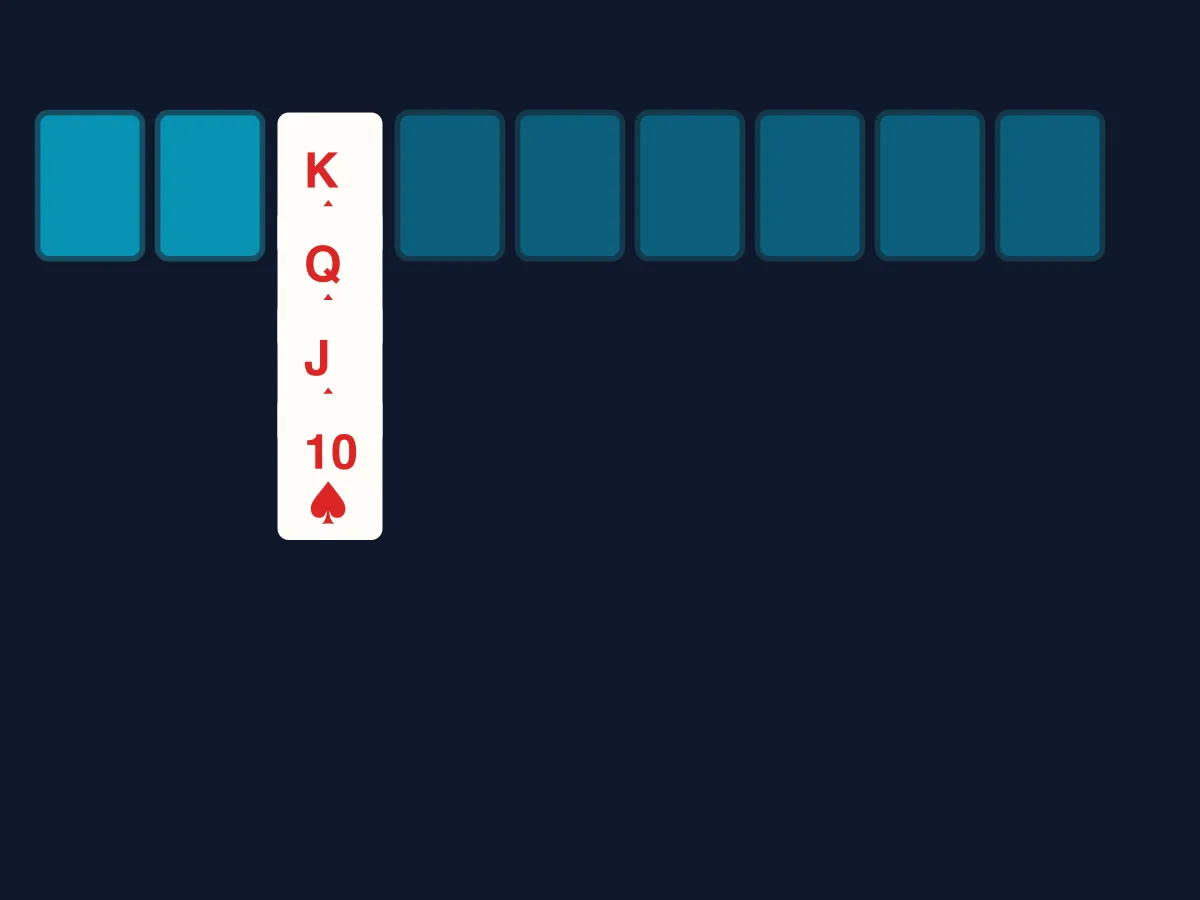
- Build the columns down in alternating colours: a red 6 goes on a black 7. A packed run — top cards already in that order — moves as a unit, whole or from any card of it up. Drag a card or run, or tap it to send it home or onto the best column.
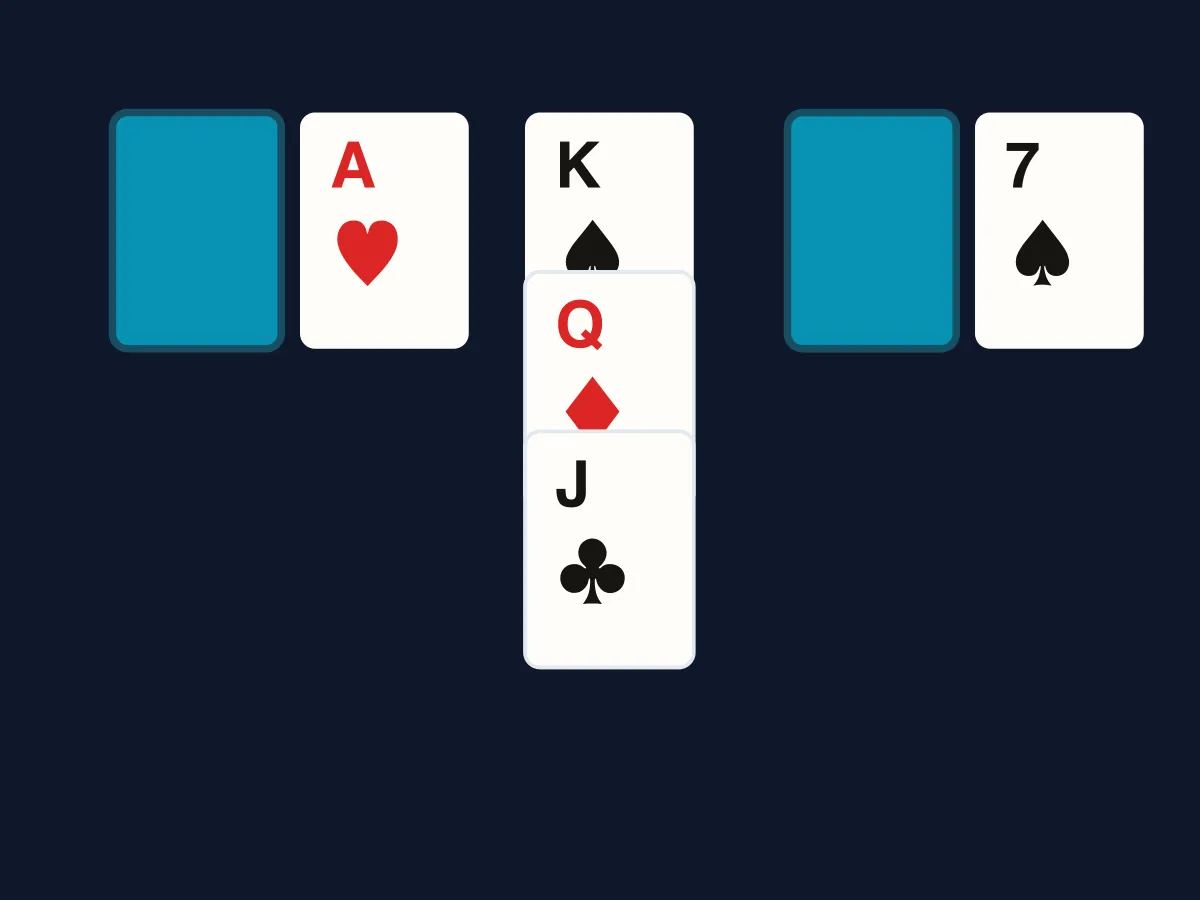
- When the last face-up card leaves a column, the card under it turns face up: the packet is opened. An empty column takes any card or packed run.
- Tap the stock to turn one card onto the waste, whenever you like; the top waste card is in play. There is only one pass through the stock and no redeal.
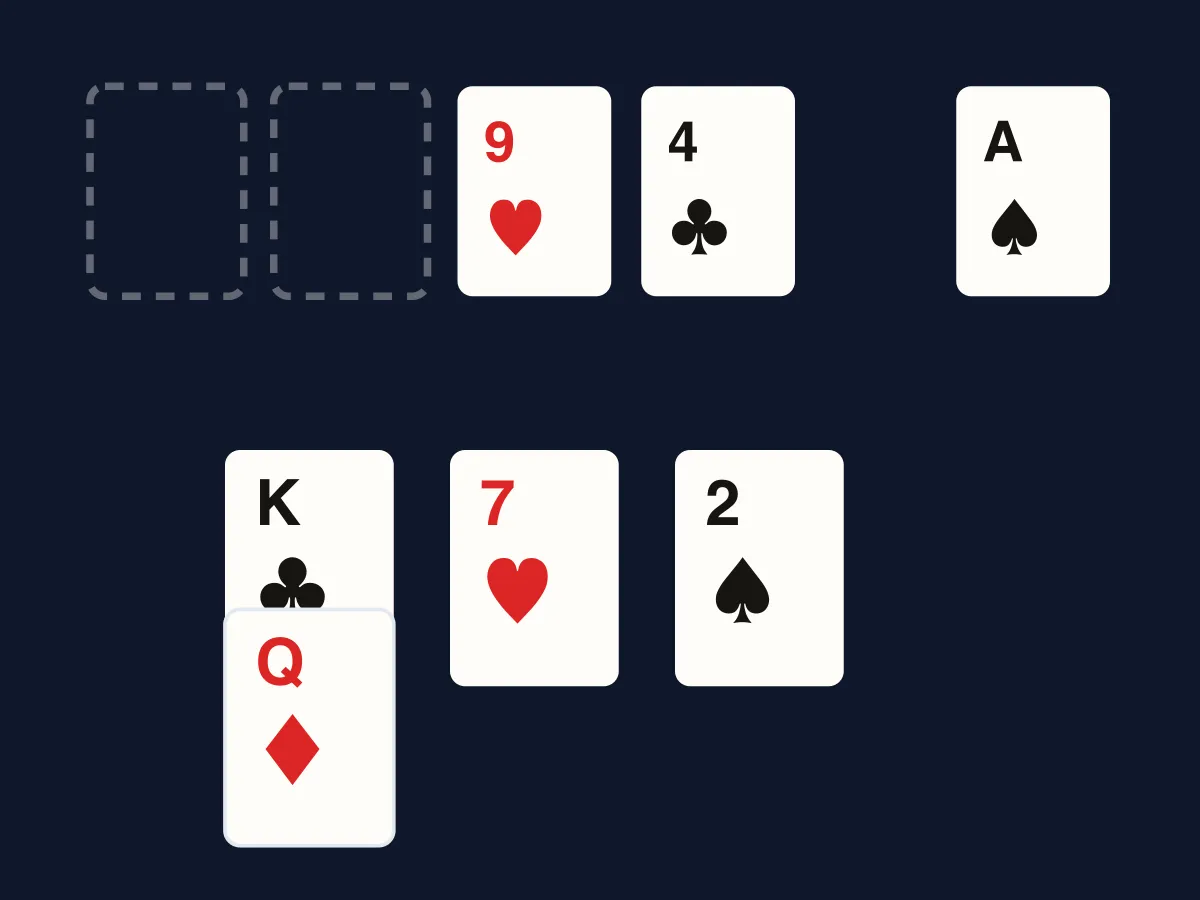
- Worrying back: the top card of a foundation may come back down onto a column of the other colour, one rank higher, to give a card somewhere to go. Cards the game would send straight home again — Aces, Twos, and any card no card left out could still need — stay home. You win when all 104 cards are on the foundations.
Tips
- Open the sealed packets first. Every face-down card is a card you cannot plan with, so moves that turn one over are worth more than moves that only tidy a column.
- Do not race through the stock. There is no redeal, and every card you turn without a place to put it buries the one under it in the waste. Make all the column moves you can before you turn the next card.
- An empty column is your strongest piece. Fill it with a run that opens a packet or with a high card that would otherwise block the waste — not with the first card that comes along.
- Keep cards out of the foundations while the columns still need them. A red 7 sent home early leaves the black 6s with one fewer place to land; if that happens, worry the 7 back down.
- Press Hint whenever you are stuck. The solver behind it can see the hidden cards, so when it finds a winning line it shows its next step and says so — and tapping the hinted card plays it.
FAQ
Is Emperor Solitaire free to play?
Yes. Emperor Solitaire is completely free to play online in your browser, with no download, no account and no in-game purchases. It works on phones, tablets and computers.
How do you play Emperor Solitaire?
Two decks are used. Ten columns of four are dealt, three face down under one face-up card, and the rest form the stock. Build the columns down in alternating colours, moving packed runs as a unit, and turn the stock one card at a time with no redeal. Eight foundations build up in suit from Ace to King. Win by getting all 104 cards home.
What is worrying back?
Worrying back means moving the top card of a foundation back down onto a column. In Emperor you may do it whenever the card fits — one rank lower and the other colour — so it can hold a card that has nowhere else to go. Emperor is credited with introducing the rule, along with the name "sealed packet" for the face-down cards in each column.
What is a sealed packet?
The three face-down cards at the bottom of each column. You cannot see or move them until every card above has gone; then the next one turns face up by itself. Opening all ten packets is the heart of the game.
Can I move a whole run of cards at once?
Yes. A packed run — cards at the top of a column going down in rank and alternating in colour — moves as one unit onto another column or into an empty one, and you can pick it up from any of its cards. The earliest written rules for Emperor allowed only one card at a time; most modern rules, and this game, allow the run.
What can go into an empty column?
Any card or any packed run: a card from the waste, a run from another column, or a card worried back from a foundation. A King is a safe choice, but often the best use of a space is a run whose departure opens a sealed packet.
How often can you win Emperor Solitaire?
We measured the first 2,400 deals. A solver that searches the moves ahead — and can see the sealed packets and the stock order, which you cannot — finds a win in 2,095 of them, about 87 deals in every 100. A rule-of-thumb player that cannot see the hidden cards, and simply sends cards home, opens packets and plays the waste where it fits, wins only 101 — about one deal in 24. Most deals can be won; winning without seeing the cards takes planning.
What does Winnable deals mode do?
It deals only hands the solver has played all the way to a win: the 2,095 winnable deals it found among the first 2,400. Random deals, the default, draws from all 999,999 deal numbers. A winnable deal can still be lost by a wrong move — undo and the hint will help you back.
How does the hint work?
The hint asks the same solver, which sees the hidden cards. When it finds a winning line from your position it shows that line's next step and says so, and tapping the hinted card plays it. If it finds no line in time, it suggests a sensible move and tells you that no winning line was found.
Why do some cards go home by themselves?
Aces and Twos always do. Any other card goes home by itself only once every foundation of the other colour already holds the rank below it — then no card left out could ever be built on it, so keeping it in the columns cannot help. Those cards also cannot be worried back. Every other card waits for you.
Is Emperor the same as Rank and File or Forty Thieves?
They are close relatives. Rank and File uses the same ten columns with sealed packets and also moves runs, but has no worrying back. Forty Thieves deals all forty cards face up and builds in suit rather than in alternating colours. Emperor is an English game; its rules appear in Mary Whitmore Jones's Games of Patience in 1890.
Can I undo, and does it save my game?
Every move can be undone one at a time, right back to the deal, even after the game has ended. Every game has a number from 1 to 999,999; the same number always deals the same cards, so Replay deal gives you the same game again. An unfinished deal is saved in your browser and picks up where you left it. With a keyboard, the arrow keys move between piles, Enter plays the top card or its run, D turns the stock, U undoes, H hints and N starts a new deal.