


Home / Card / Montana Solitaire
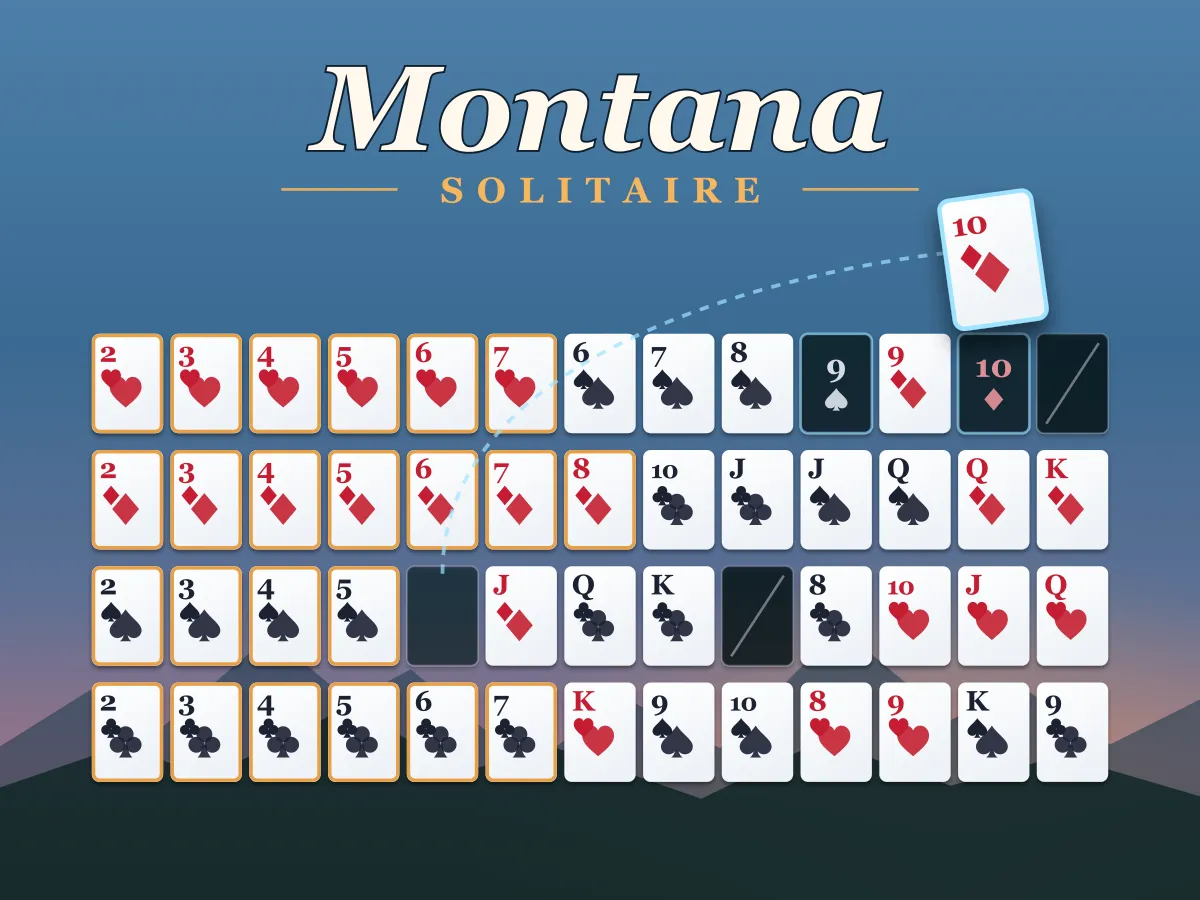
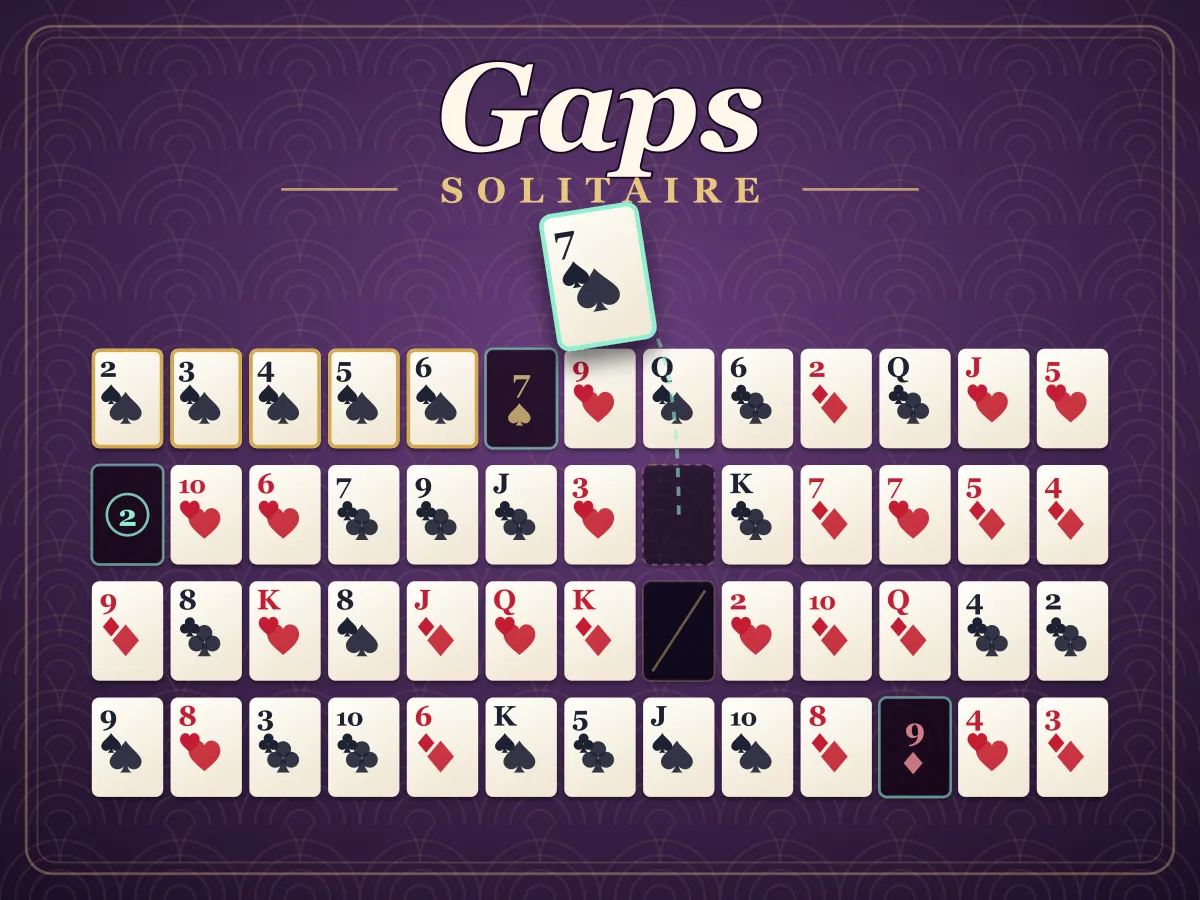
Montana Solitaire is the classic gap-filling grid patience, free to play online in your browser with no download and no sign-up. All 52 cards are dealt face up in four rows of thirteen, then the four Aces are taken out, leaving four gaps. A gap takes exactly one card: the next card up, in the same suit, as the card on its left — a gap right of the 7♥ takes the 8♥ — while a gap at the left end of a row takes any Two and a gap right of a King is dead. When nothing can move, each row keeps the run it has built from its left column, and every other card is picked up row by row and dealt straight back in the same order, not shuffled, with one gap after each run; you get three rounds, the deal and two redeals. Because nothing is shuffled, the whole game is open: you can work out every redeal before you make it, and so can our solver, which shows that every one of the first 2,400 deals can be won — while a player who only looks one move ahead wins just 82 of them, about one in 29. A second game type, Blue Moon, deals into four rows of fourteen with each Ace moved to the start of a row, and shuffles its redeals. Tap a gap to fill it or a card to send it home, drag if you like, undo any move, ask for a hint, and replay a deal as often as you like.
How to play Montana Solitaire
- The game deals all 52 cards face up in four rows of thirteen, then takes the four Aces out of play. That leaves four gaps in the grid. The goal is to rebuild every row in a single suit, from a Two at the left end up to the King, with the row’s gap at the far right.
- A gap takes exactly one card: the next card up, in the same suit, as the card on its left. A gap right of the 7♥ takes the 8♥, wherever that card is lying. Tap the gap to bring that card over, or tap the card to send it to its gap — each empty cell shows the card it is waiting for.
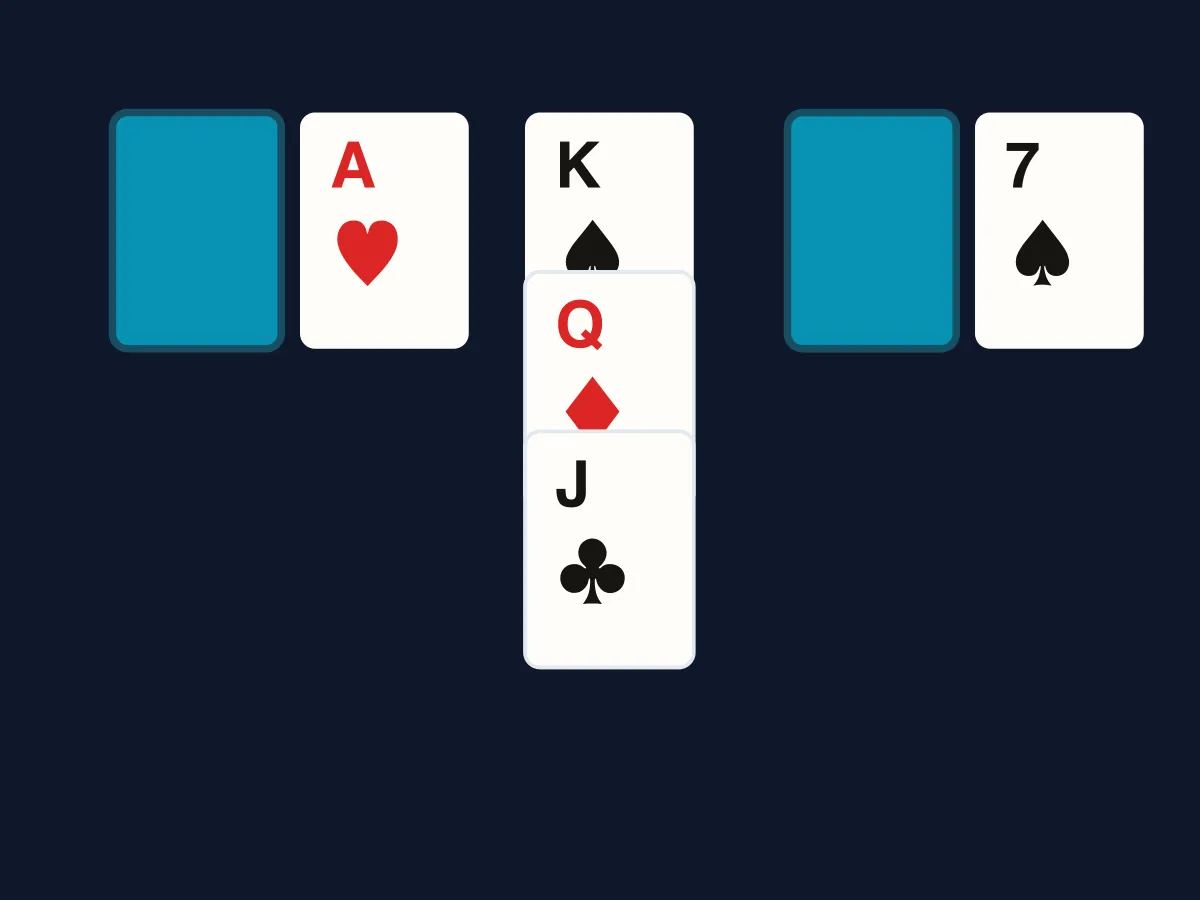
- A gap at the left end of a row takes any Two, and the Two you choose decides which suit that row will be. When several Twos could go there, the gap pulses and the Twos shimmer: tap the one you want.
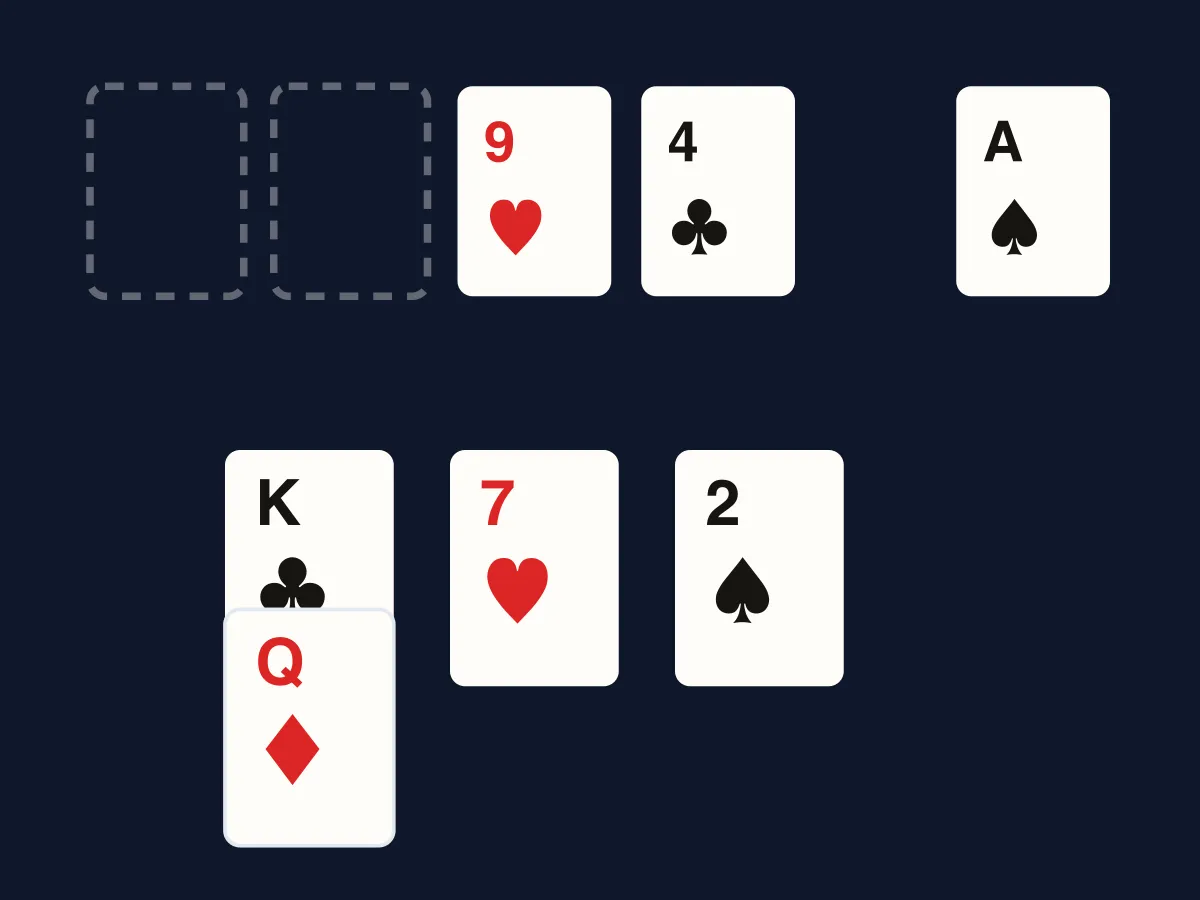
- A gap right of a King is dead — nothing comes after a King — and so is a gap right of another gap until that one is filled. Every move opens a new gap where the card came from, so one move often sets up the next, and the next.
- When no card can move, the round is over: press Redeal. Each row keeps the run it has built in suit from its left column. Every other card is picked up row by row, left to right, and dealt straight back in that same order — not shuffled — leaving one gap just right of each kept run. You get three rounds: the deal and two redeals.
- You win when every row runs from Two to King in one suit. If the last round blocks before that, the deal is lost: undo, replay the deal, or start a new one. For a different challenge, switch the game type to Blue Moon: four rows of fourteen, each Ace moved to the start of a row, rows built from Ace to King, and redeals that are shuffled.
Tips
- Plan the redeal. In Montana the loose cards come back in the order they lie, read row by row, so before you play out a round you can see which card will land just after each of your runs — and steer the last few moves to make that card the right one.
- Choose each row’s suit with care. Before you drop a Two into a left-end gap, look at what lies next to that gap: a Two whose Three already sits beside it gives you two cards in place at once.
- Watch the Kings. A gap opened right of a King is wasted for the whole round, so think twice before moving a card that sits just after one — sometimes it is better to leave it and play elsewhere first.
- Cards in place are the only cards that stay put through a redeal, so a round is judged by how long your runs are when it ends. Extend a run whenever you can.
- Press Hint when you are stuck. Nothing in Montana is hidden or shuffled, so a hint that says it keeps a winning line open really does — follow it and the deal will come out.
FAQ
Is Montana Solitaire free to play?
Yes. Montana Solitaire is completely free to play online in your browser, with no download, no account and no in-game purchases. It works on phones, tablets and computers.
How do you play Montana solitaire?
Deal all 52 cards face up in four rows of thirteen and take out the four Aces, leaving four gaps. Fill a gap with the card one rank higher, in the same suit, than the card on its left; a gap at the left end of a row takes any Two, and a gap right of a King is dead. When nothing can move, keep each row’s run from its left end, pick up the other cards row by row and deal them back in the same order with a gap after each run. Win by building every row in suit from Two to King within three rounds.
How is Montana different from Gaps?
They are the same family of grid patience, and the names are often swapped. Our Gaps Solitaire plays the common modern rules, where the gathered cards are shuffled before each redeal. This Montana plays the other documented version, where they are not: the loose cards are picked up row by row and dealt straight back in that order. That one change makes Montana a game of complete information — no luck after the deal, every redeal can be worked out in advance, and the game rewards planning rather than hope.
Why are the redeals not shuffled?
Because that is how this version of Montana is played, and it changes the game. With a shuffle you hope for good cards; without one you plan for them. Before a round ends you can read off which card will fall just after each of your runs, and the moves you make last decide it.
How often can you win Montana?
We measured the first 2,400 deals. Our solver finds a win in 2,396 of them within the hint’s time limit and in each of the last 4 with a longer search, so every one of those 2,400 deals can be won with perfect play. A player who always extends a run when it can and otherwise makes the move that looks best one step ahead wins only 82 of them — about one deal in 29. The difference is planning, which is what this version rewards.
What is Blue Moon?
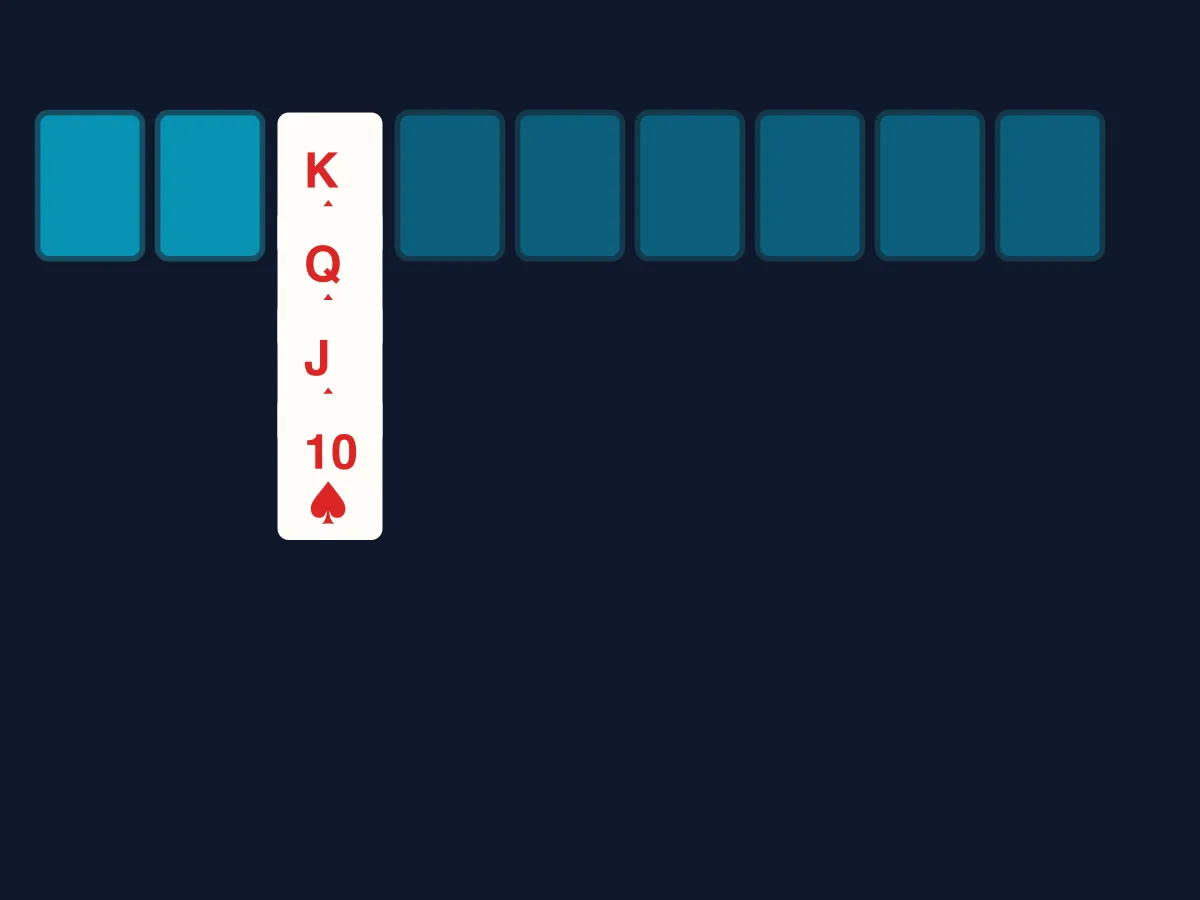
Blue Moon is a close relative of Montana, offered here as a second game type with the rules PySol gives it. The cards are dealt into four rows of fourteen with the left column empty, then each Ace — in the order they lie, top row first — moves to the start of a row, leaving a gap where it was. Each row is built from its Ace to the King, and the redeals shuffle the gathered cards. A solver that knows how each shuffle will fall wins all of the first 2,400 deals; a player looking one move ahead wins 120 of them, about one in 20.
What can go into a gap at the left end of a row?
Any Two. The Two you put there decides which suit the whole row will be built in. When more than one Two could go there, tap the gap and then the Two you want, or drag a Two straight in. In Blue Moon the left column always holds an Ace, so that choice is made by the deal.
Why can nothing go in the gap after a King?
A gap takes the card one rank higher than the card to its left, and nothing ranks above a King, so that gap is dead until the next redeal. A gap right of another gap is stuck too, until the gap on its left is filled. Dead gaps are drawn crossed out.
How does the hint work?
The hint asks a solver that sees the whole game — in Montana there is nothing hidden to see. While it can find a winning line from your position, it shows the next step, a card and the gap it goes to, or the Redeal button, and says so; tapping the hinted card plays it. If it runs out of time first, it shows a sensible move that does not lose on the spot. When you lose, the result card tells you whether the deal could have been won from the start.
How is Montana different from other solitaire games?
There are no columns, foundations or stock. The whole deck lies in a grid from the start and you sort it in place, one card into one gap at a time, so the game is about chain reactions: each move opens a gap that wants a different card. It plays more like a sliding puzzle than like Klondike or FreeCell.
Can I undo a move, and what is the deal number?
Yes, every move can be undone one at a time, right back to the deal, redeals included, even after the game has ended. Every game has a number from 1 to 999,999; the same number always deals the same cards, so Replay deal gives you the same game again and New deal picks a different one.
Does it save my game, and can I play with a keyboard?
An unfinished deal is saved in your browser and picks up where you left it. With a keyboard, the arrow keys move around the grid, Enter fills a gap or plays a card, U undoes, H asks for a hint, R redeals and N starts a new deal.